
Summary
Isotherms are the basic building blocks of a McCabe-Thiele analysis for designing or evaluating circuits. This section describes the process for generating isotherms and details some of the factors that influence isotherm positioning and shape.
Generation of Isotherms
Isotherms define the capabilities of the extractant in both the extraction and stripping sections of the plant. They are used to evaluate how efficiently a plant is running, or would be expected to run, under given conditions.
Isotherms are defined by the equilibrium constant (K) of the extractant:
Cu2+ + 2LH ⇄ L2 Cu + 2H+
K ~ [H]2 [L2 Cu] / [Cu] [LH]2
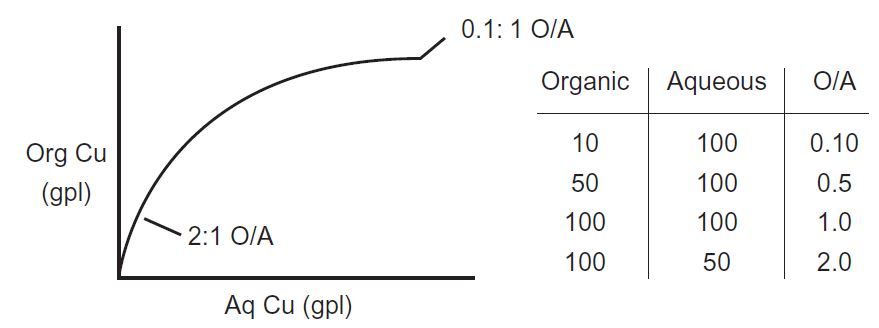
The extract isotherm defines the maximum amount of copper that may be removed from the PLS for each organic-to-aqueous volumetric, or O/A, ratio. Organic (reagent + diluent, stripped of copper) is mixed with the PLS at various O/A ratios until equilibrium is obtained. The organic and aqueous are separated and the copper concentration in each phase is analyzed. The data is graphed, with organic copper on the y-axis and aqueous copper on the x-axis.
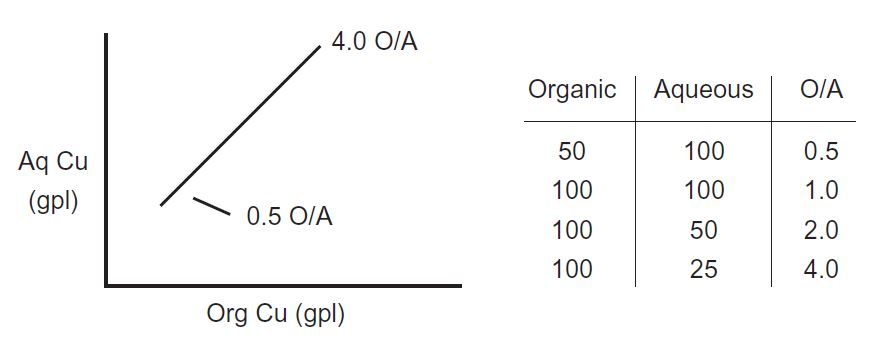
The strip isotherm defines the maximum amount of copper that may be removed from the organic for each O/A ratio. Organic (loaded with copper) is mixed with lean electrolyte at various O/A ratios until equilibrium is reached. The organic and aqueous are separated and the copper concentration in each phase is analyzed. The data is graphed, with aqueous copper on the y-axis and organic copper on the x-axis.
Extract isotherms
Four primary factors affect the position and shape of the isotherms:
- Cu concentration in the aqueous phase
- Acidity/pH in the aqueous phase
- Choice of extractant
- Extractant concentration
Some of these relationships for extraction are shown:
Effect of pH
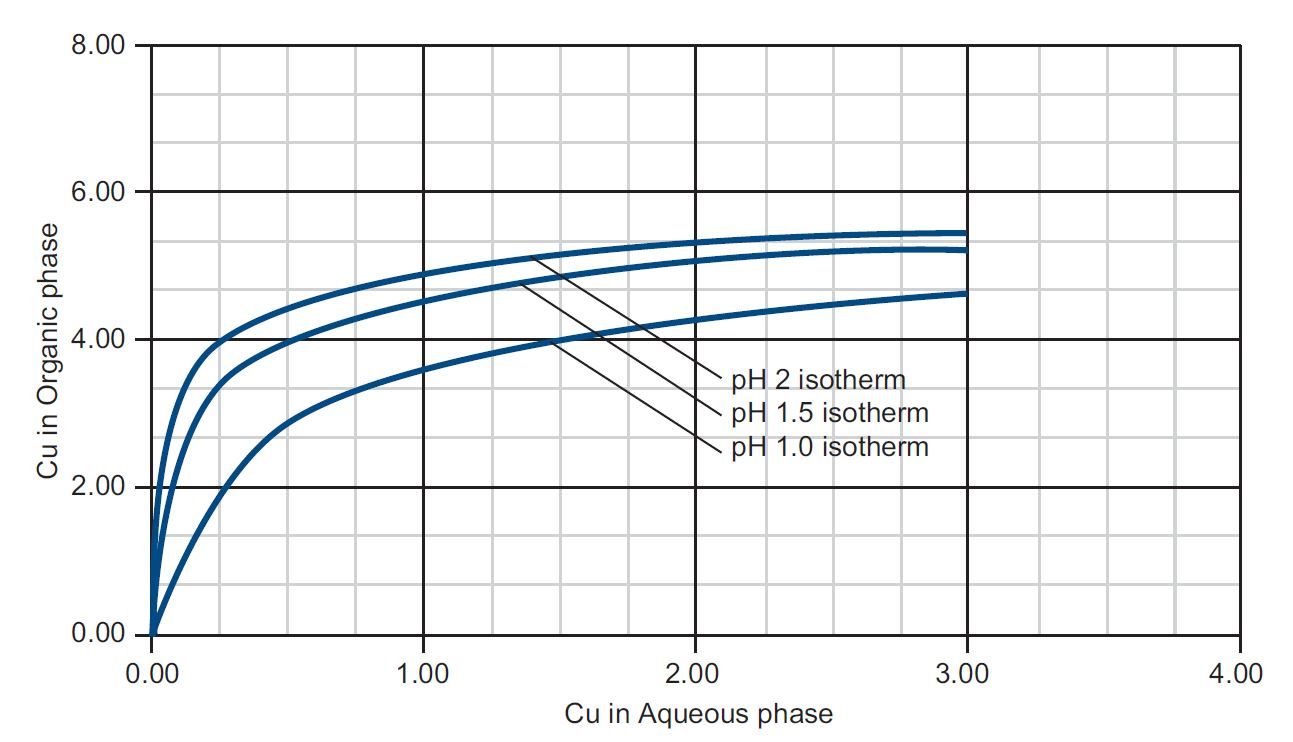
For a given reagent, the lower the PLS pH (higher the leach solution acidity), the more depressed the extract isotherm (i.e., the organic will load less copper at higher acidities).
Effect of PLS copper concentration
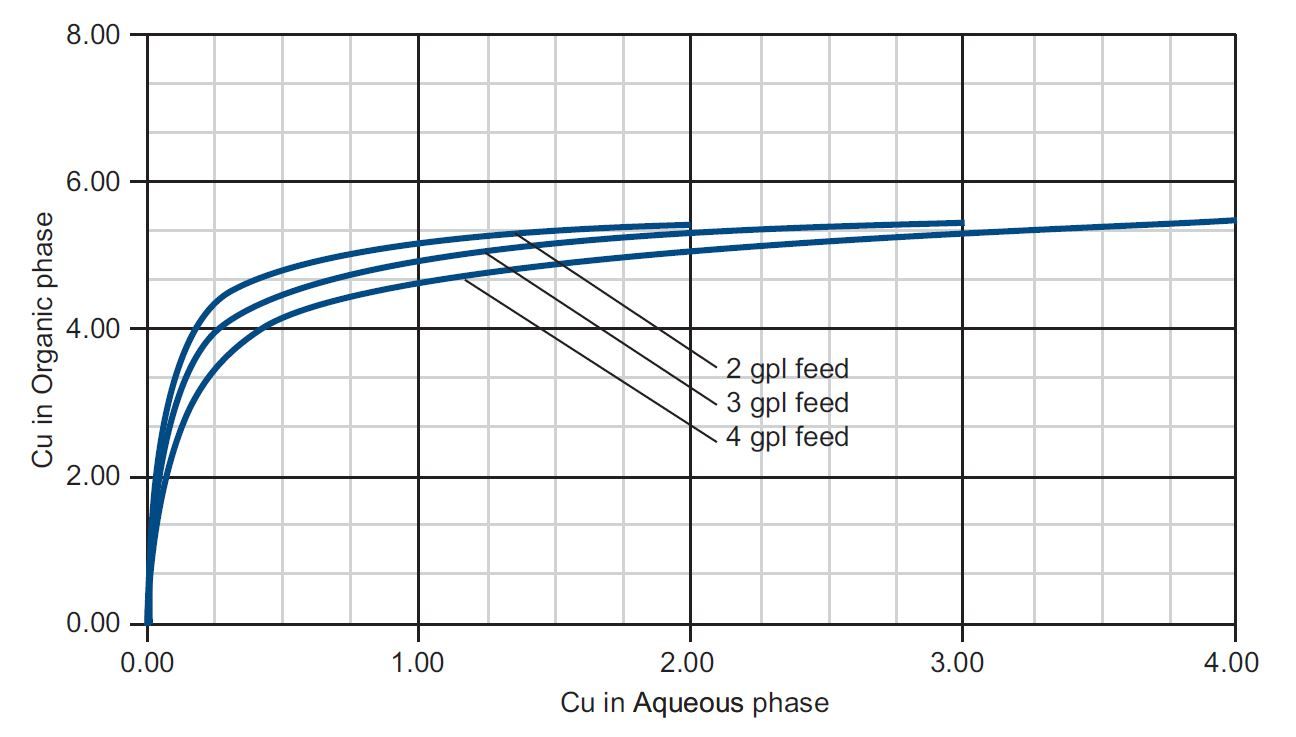
For a given reagent, the higher the copper concentration, the more depressed the extract isotherm (or lower the organic loading capacity as copper is depleted from the aqueous phase). This is due to the increasing acidity of the aqueous phase as copper is transferred to the organic.
Effect of reagent concentration
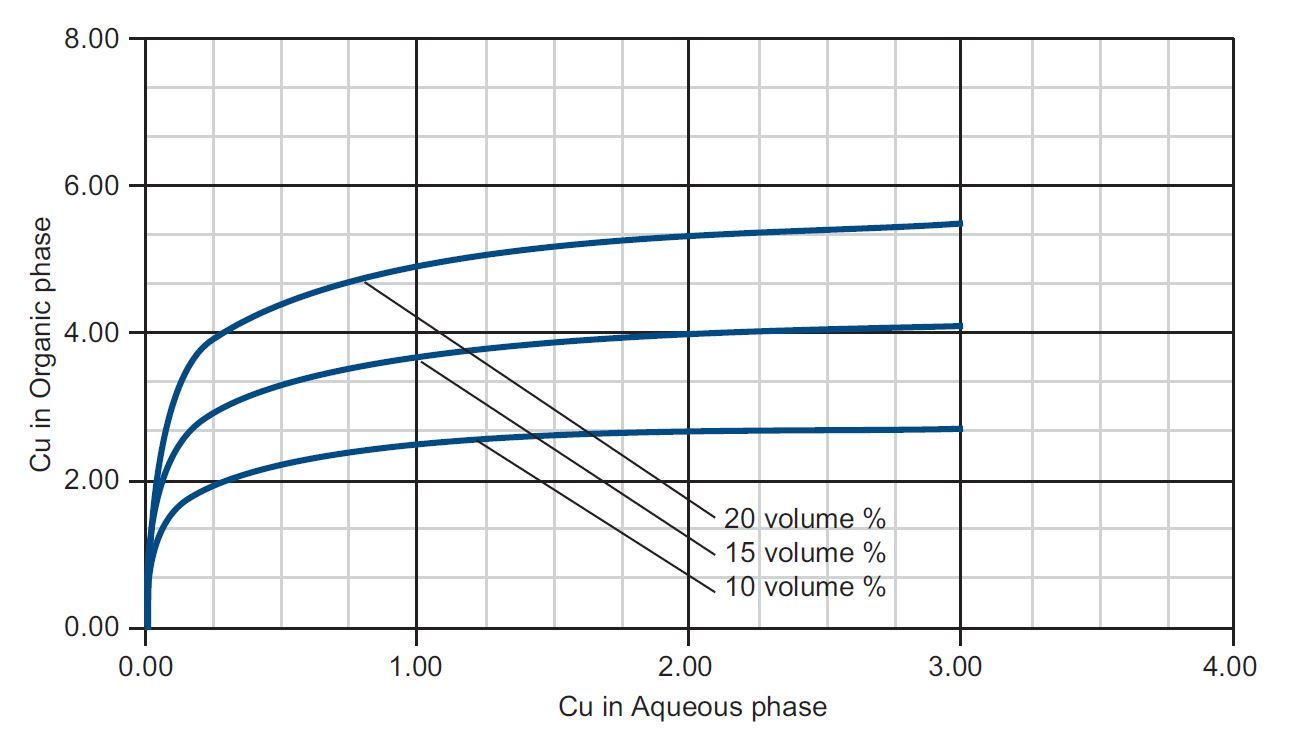
For any given reagent, the higher the reagent concentration, the steeper the extract isotherm or higher the organic loading capacity (i.e., greater the capacity to extract copper).
Effect of reagent "strength"
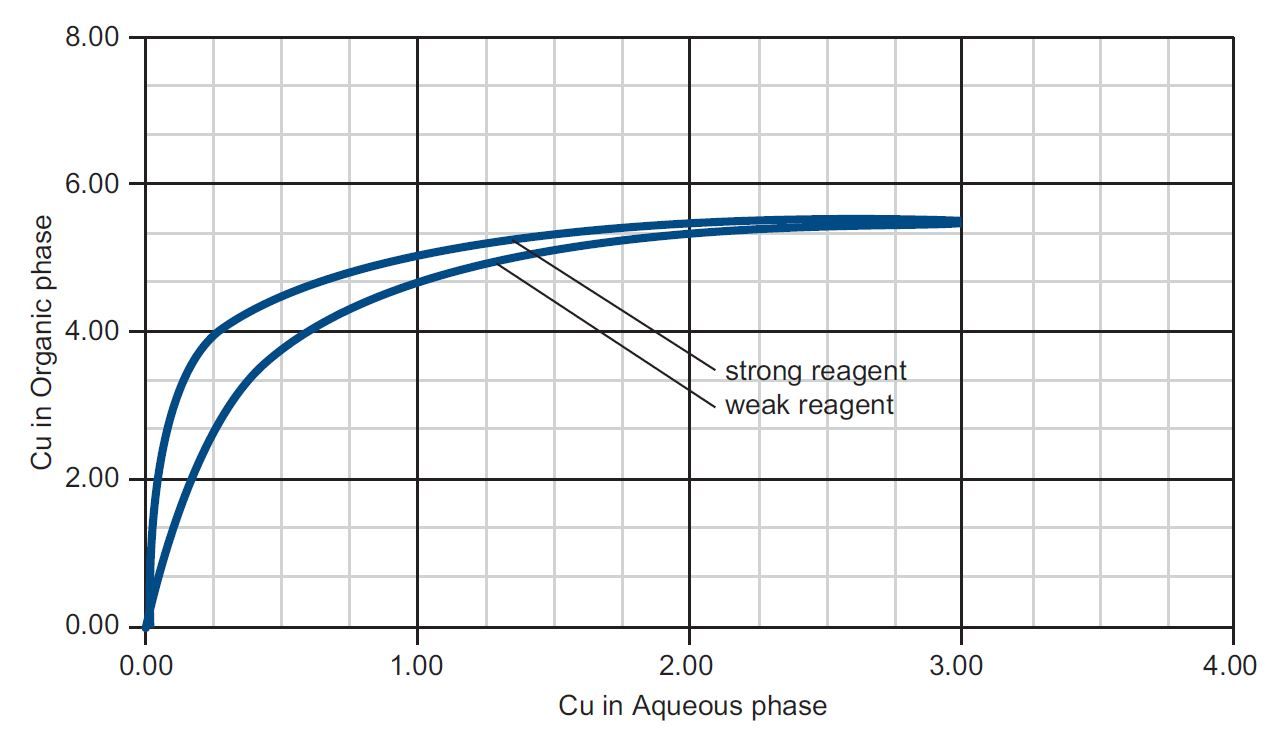
Given the same feed conditions, the ability of a reagent to extract copper depends on the "strength" of the copper-extractant complex. The stronger the complex, the higher the copper loading capacity as the pH falls.
As shown, a separate extract or strip isotherm is needed for each feed condition, each reagent concentration, and each reagent formulation that is considered.
Strip Isotherms
Four primary factors affect the position and shape of the isotherms:
- Cu concentration in the aqueous phase
- Acidity/pH in the aqueous phase
- Choice of extractant
- Extractant concentration
- Some of these relationships for stripping are shown
Effect of lean electrolyte acidity
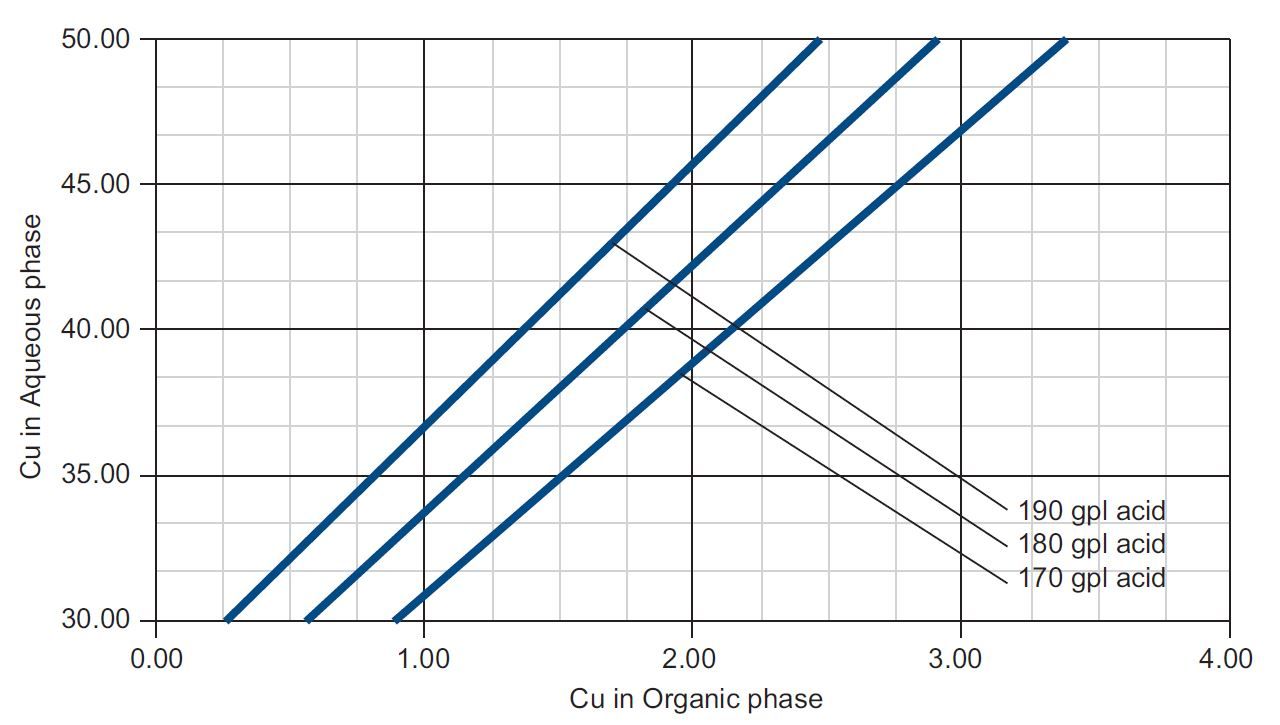
For a given reagent, the higher the acidity of the stripping solution, the better the stripping, or lower the organic copper concentration relative to a given rich electrolyte.
Effect of electrolyte copper concentration
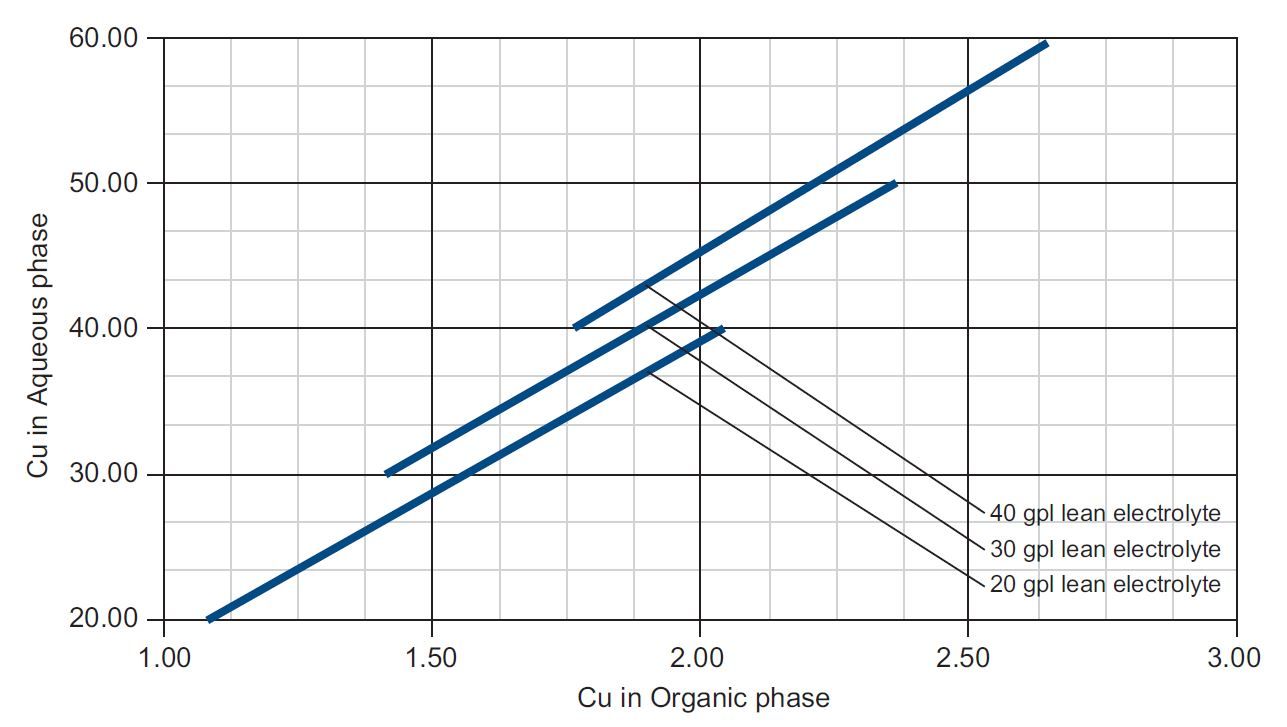
For a given reagent and fixed acid concentration, as the copper concentration in the lean electrolyte increases the effect on the strip isotherms is shown in Figure 17. The impact on barren organic copper will depend on operating conditions.
Effect of reagent concentration
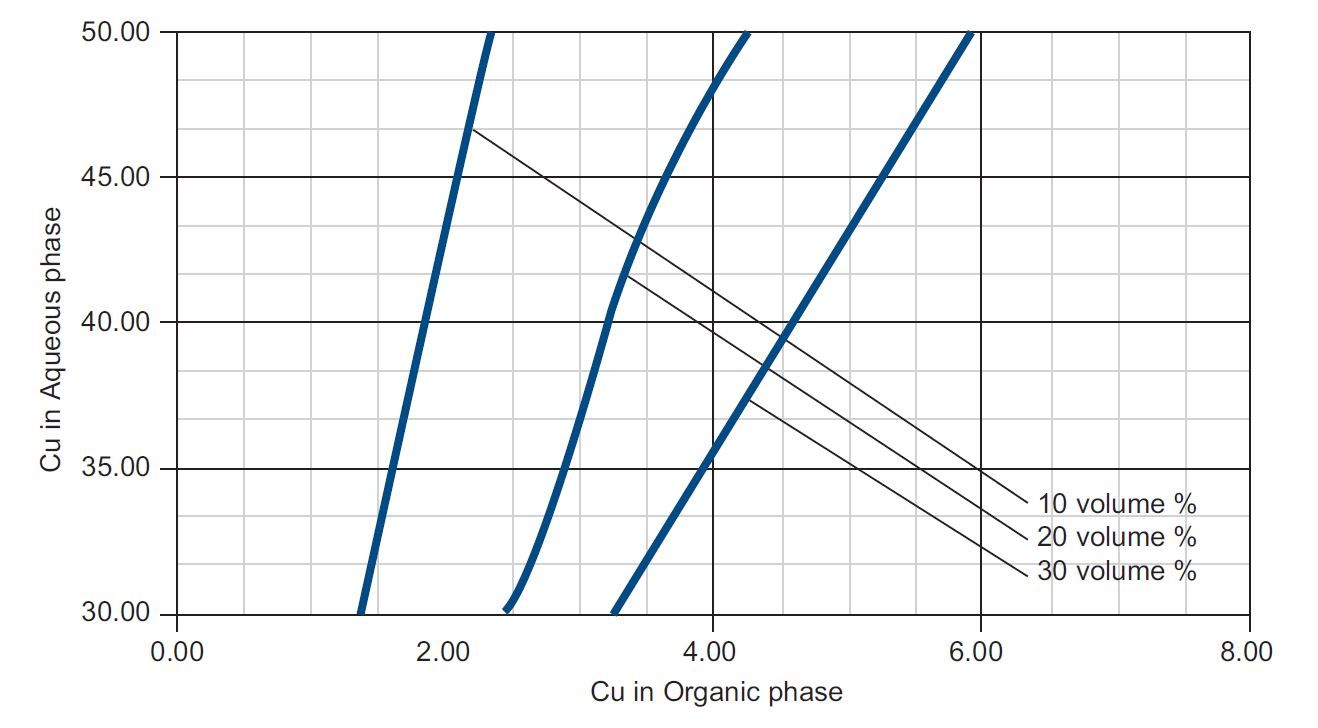
For a given reagent, the higher the reagent concentration, the more copper will remain in the organic phase for a given rich electrolyte target.
Effect of reagent strength
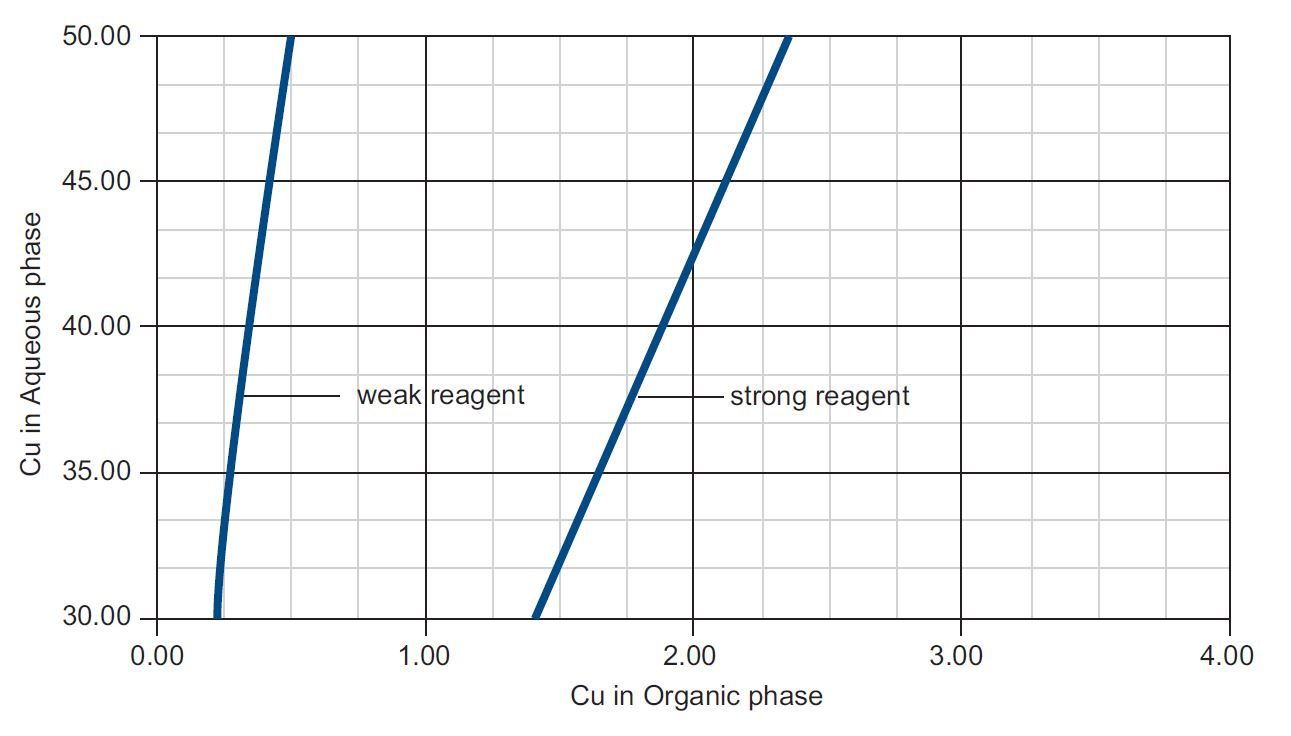
Given the same electrolyte stripping conditions, the ability of a reagent to strip depends on the strength of the formulation. The weaker the formulation, the easier it is to strip (lower organic copper concentration for a given rich electrolyte).
As shown, a separate extract or strip isotherm is needed for each feed condition, each reagent concentration, and each reagent formulation that is considered.
