
Executive Summary
It goes without saying, that the role of collectors is central to the effective separation of value sulfide minerals from each other as well as from gangue minerals. The wide diversity of ore types processed by any given plant by necessity requires the flexibility in flotation that is only offered by a wide range of chemistries. What’s more, selectivity in flotation is paramount to achieving concentrate grade and is based on the fact that different minerals respond uniquely to specific chemistries. Lastly, one cannot ignore reagent characteristics that impact an operation’s safety, health and environmental factors and these should always factor in the choice of collector used. Syensqo offers a wide range of chemistries that have been designed for best flotation performance and serve as building blocks for customized formulations that are tailored for specific minerals and ore types. The following is an overview of the chemistries available and what Syensqo offers commercially for sulfide ore flotation.
General Comment / Major Considerations
Without question, collectors play a central role in the flotation treatment of sulfide and metallic ores. Contained within these ores are a diversity of metals such as copper, lead, zinc, nickel, cobalt, molybdenum, iron, precious metals (including platinum-group metals), as well as penalty elements like arsenic, antimony and bismuth. It is therefore expected, as is in fact done in practice, that a large number of collector types be used for collection and separation across all sulfide ore types. Choice of the appropriate collectors for the specific ore type in question is then paramount to achieving best metallurgical results. The principal factors affecting the choice of collectors are the nature of the minerals present (sulfide, oxidized and/or metallic species), their identity (e.g. chalcopyrite vs. chalcocite), and their associations with each other and gangue minerals.
Recent trends in flotation practice have shown that, in many cases, a combination of two or more different collectors provides better metallurgy than a single collector. This is not surprising when one considers that, even in such a simple case as copper ores, there may be a variety of copper minerals present (e.g., chalcopyrite, chalcocite, covellite, bornite, native copper, tetrahedrite, and oxidized or tarnished copper minerals), each of which responds differently to different collector chemistries. Obviously, this aspect is even more important when making a bulk float of minerals of two different metals (e.g., lead and copper). For many decades, the most commonly used collector combinations were those of xanthate and dithiophosphate, or of xanthate and dialkyl thionocarbamate. However, in the past 20-25 years, a large number of new collector chemistries have been developed and introduced by Syensqo. While increasing the complexity of the reagent testing process, this has undoubtedly greatly expanded the opportunity of establishing the optimum reagent combination for any specific ore. The aspect of collector selection based on ore type is addressed in more detail in each of the specific sulfide ore sections.
Syensqo's sulfide collectors (promoters)
There are many possible ways of categorizing sulfide collectors such as copper collectors, lead collectors, soluble collectors, oily collectors, thiol collectors, etc. However, we feel that none of these classifications adequately provides a platform to discuss the fundamental aspects of a sulfide collectors' functionality. Consequently, we have chosen instead to classify collectors based on their chemical structure, functional groups, and the important donor atoms; a different approach will be used when we address reagent selection for particular applications. Herein below, we will discuss several reagent chemistries that are commonly utilized in crafting reagents for the flotation of sulfide ores. These chemistries can be viewed as the building blocks used in the development of customized flotation reagents, in accordance with Syensqo's FM-100 approach. Occasionally, they can be used on a stand-alone basis if, after we have applied Syensqo's FM-100 approach, it is determined that it is the best/optimum reagent alternative. However, in most instances, given the complex mineral assemblies being processed nowadays, a customized reagent is required. These customized reagents, in most instances, entail the combination of two or more of these building blocks. The combination, or blending of two or more of these building blocks, requires intimate knowledge of the stability and reactivity of the blends. Hence, it requires extensive training in organic chemistry, as well as chemical thermodynamics.
Challenges Faced
Choosing collectors that yield optimum metallurgy can be a daunting task, especially when processing different types of ores. The following are some of the challenges that plants face when using- or deciding to use a given collector:
- A given collector works for one ore type but not for others. That is, the initial choice of collector did not account for ore variability and is thus not robust, leading to time-consuming adjustments or even plant downtime.
- The incumbent collector is non-selective against iron sulfides leading to high lime or depressant costs.
- The collector chosen exacerbates froth issues related to non-sulfide gangue minerals.
- The collector is froth positive and, together with a given frother, leads to a persistent or otherwise undesirable froth. This is observed, for example, with some dithiophosphates.
- The collector leads to froth collapse (defoaming action). This effect has been observed, for example, with some xanthates in the context of hydrophobic magnesium silicate minerals.
- High dosage of collector is needed given the operating condition of the plant. For example, large amounts of xanthate may be needed when operating at pH 4 given that xanthates decompose rapidly under those conditions.
- The collector is good for chalcopyrite recovery but performs poorly for secondary copper mineralogy.
Traditional Strategies / Syensqo Recommendations
Xanthate-Based Collectors
Xanthates (Traditional collectors)
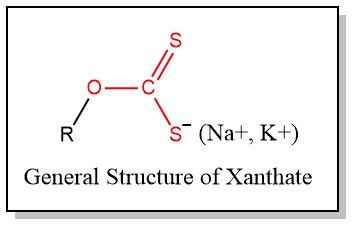
Xanthate collectors were introduced in 1925 and are still widely used, especially for easy-to-treat ores, where selectivity (especially against iron sulfides and penalty elements) is not an issue. They are usually supplied in powder or pellet forms and are readily soluble in water, and can be made up to any strength for convenience in dosing. Xanthate solutions have relatively poor long-term stability and, therefore, are supplied in liquid form only when the manufacturing plant is in close proximity to the use location. Xanthates are available in a range of carbon chain lengths , generally from C2 to C5 (the carbon chain is represented by the R group in the figure). The collecting power generally increases with increase in chain length, but the selectivity decreases. The following are representative examples of increasing chain length:
- Sodium Isopropyl Xanthate (SIPX). Most widely used in the flotation of sulfide minerals of copper, molybdenum and zinc. Good compromise between collecting power and selectivity.
- Sodium Isobutyl Xanthate (SIBX). A relatively strong collector used in the flotation of Cu, Pb, Ni, Zn, and PGM ores.
- Potassium Amyl Xanthate (PAX). The most powerful and least selective xanthate. Often used as a scavenger collector following a more selective rougher collector. Used widely in the flotation of Cu, Ni, Zn, and Au-containing iron sulfides.
Xanthates are relatively unstable at low pH and, therefore, are not suitable for flotation in acid circuits. In addition to the stability issues, there are Health, Safety, and Environmental (HSE) issues related to the usage of xanthates; they are combustible, self-ignite/explode, and release toxic gases such as CS2, COS, etc. during storage, shipment and usage. Hence, Syensqo has developed a series of xanthate replacement products that exhibit a metallurgical profile very similar to that of the xanthates without the HSE concerns associated with xanthates. It is recommended when feasible that xanthates be replaced with a product from the xanthate replacement product line. Chemically, the xanthate replacement products consist of specially designed blends of functionalized thionocarbamates , polysulfides, and modifiers.
AERO® XR (Xanthate Replacement) products
The HSE problems of xanthates, as mentioned above, prompted Syensqo to develop more sustainable options to xanthates while keeping or enhancing the metallurgical benefits. The novel solutions are liquid products that can be dosed directly to the process, substantially improving:
- Handling and level of exposure of the personnel to product
- Stock safety management
- Residual generation
- Simplifying the plant operation.
Xanthate replacements are typically custom-formulated products developed through Syensqo's FMTM-100 approach. There are several off-the-shelf formula- tions that can be explored such as AERO® MX-3730, AERO® MX-3740, AERO® MX-3752, AERO® MX-3753 and AERO® MX-3754 promoter, AERO® MX-5160.
Xanthate Derivatives
Two classes of xanthate derivatives are in common use: xanthate allyl esters and xanthogen formates. Both are oily collectors, more selective than the corresponding xanthate, and can be used over a wide pH range. Since they are insoluble in water, point of addition and conditioning time may be important for adequate dispersion and mixing. Xanthate allyl esters are among the most selective of all the available sulfide collectors.
Xanthate Allyl Ester
AERO® 3302 promoter
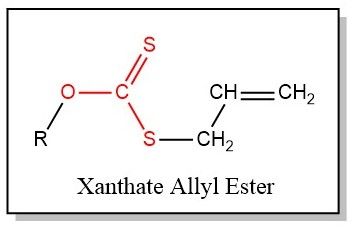
Key Attributes:
- Oily collector, not soluble in water, therefore, usually fed to the grinding mill.
- Effective copper collector in both alkaline and acid circuit. Also good for zinc flotation in alkaline circuit (with lime as pH modifier). Usually used in conjunction with xanthate. Very selective against pyrite.
- Excellent collector for molybdenite and, therefore, is often used on copper/molybdenite ores.
- Often increases recovery of gold and silver.
- Used for flotation of sulfidized copper-oxide minerals.
Dialkyl Xanthogen Formate
AERO® 3758 and AERO® 7291 promoters
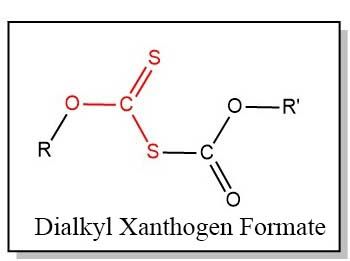
Key Attributes:
- Oily collector, not soluble in water, therefore, usually fed to the grinding mill.
- Originally developed specifically for flotation of copper ores in acid circuits (pH 3-5). They are now used in both acid and alkaline circuits for copper-molybdenum ores, and in alkaline Zn circuits.
- In alkaline circuits, they are more selective than their corresponding xanthates.
- AERO® 3758 and AERO® 7291 promoters are formulated products that are designed to improve flotation kinetics and froth characteristics/properties.
Phosphorous-Based Collectors
Aryl Dithiophosphates
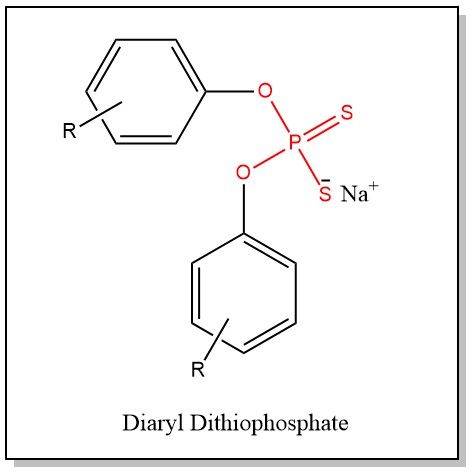
AEROFLOAT® and AERO® promoters
Aryl dithiophosphates find most application in complex and polymetallic sulfide ores (Pb-Ag-Zn-Cu) where they are used to float Pb or Cu/Pb against unactivated or activated Zn minerals. They can be in salt or acid form and are applied neat. Aryl dithiophosphoric acids tend to be more stable than their alkyl dithiophosphoric counterparts. The following is a representative list from Syensqo's aryl dithiophosphate line.
AEROFLOAT® 25 promoter - Acid form. Good for Ag, Pb, Cu and activated Zn sulfides.
AEROFLOAT® 31 promoter - This is based on AEROFLOAT® 25 promoter, but contains a secondary collector to improve silver flotation. Widely used for flotation of Pb from Pb/Zn ores and Cu/Pb from Cu/Pb/Zn ores. Improves Ag recovery from these ores.
AEROFLOAT® 241 promoter - This is the ammonium salt of AEROFLOAT® 25 promoter. Water soluble in all concentrations. Most selective of all liquid AEROFLOAT® promoters. Widely used for flotation of Pb from Pb/Zn ores, and as a secondary collector for some copper ores.
AEROFLOAT® 242 promoter - This is the ammonium salt of AEROFLOAT® 31 promoter. It is water soluble, but should be made up at minimum 10% strength to avoid precipitation of the secondary collector. Widely used for flotation of Pb from Pb/Zn ores and Cu/Pb from Cu/Pb/Zn ores. Improves Ag recovery from these ores.
AERO 7310® promoter – This is similar to AEROFLOAT® 241 promoter but with a higher activity.
Key Attributes:
- AEROFLOAT® 25 and AEROFLOAT® 31 promoters have considerable frothing properties, much more so than their ammonium salts, AEROFLOAT® 241 and AEROFLOAT® 242 promoter
- In alkaline circuit, the aryl AEROFLOAT® promoters have a much lower tendency than xanthates to float pyrite, pyrrhotite, and unactivated sphalerite
- Unlike xanthates, the aryl AEROFLOAT® promoters are stable in acid circuits; however, they lose their selectivity against iron sulfides under those conditions. Consequently, AEROFLOAT® 25 and AEROFLOAT® 31 promoters can be used as strong, non-selective sulfide promoters for bulk flotation in acidcircuit.
- AEROFLOAT® 25 and AEROFLOAT® 31 promoters should be added to the pulp at full strength. Because they are in the free acid form, pre-mixing with water or AEROFLOAT® 241 or AEROFLOAT® 242 promoter, or any other aqueous product could release toxic H2S gas. This precaution does not apply to the addition of these reagents to pulps in the amounts normally used for flotation
Aryl Monothiophosphates
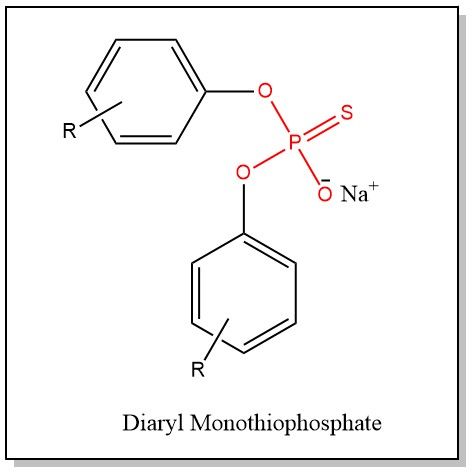
AERO® 5688 Promoter
AERO® 5688 - is a novel collector based on monothiophosphate chemistry. In commercial use at a number of operating locations around the world, AERO® 5688 promoter is particularly effective for selective flotation of precious metals in alkaline circuits (pH > 7.0). It is also effective in the flotation of sulfide minerals and precious metals in acid circuits. In moderately alkaline circuits (pH 7-10), it can be used for selective flotation of copper sulfide minerals and precious metals from ores, in which the presence of highly activated iron sulfide minerals precludes the use of other sulfide collectors; in fact, with respect to iron sulfides, AERO® 5688 promoter is perhaps the most selective of the available sulfide collectors in alkaline circuits.
Key Attributes:
Primarily used in the flotation of:
- Base metal sulfides, gold/silver and PGMs from ores in acid circuit (pH 3-7).
- Selective gold/silver and copper sulfides flotation in mildly alkaline circuits (pH 7-10).
- Used in conjunction with traditional sulfide collectors to improve precious metals recovery in alkaline circuits.
- Flotation of cement (or “sponge”) copper in the Leach-Precipitation-Flotation (LPF) process.
- In acid circuits, dosage requirements for AERO® 5688 are significantly lower than those for the more traditional sulfide collectors. Experience also indicates that these collectors improve flotation kinetics, especially of slow floating gold particles.
- Dosage rates are usually in the range of 5 to 50 g/t for base metal sulfide ores and up to 100 g/t for precious metal ores.
- AERO® 5688 promoter can be fed directly to the circuit, or can be diluted with water to any strength. For ease of metering, it is often diluted to 5-10% strength.
- AERO® 5688 promoter exhibits some frothing properties.
Formulated Aryl Phosphorus-Based Product
AERO® 8985 - is a formulated product that is used for Cu-Au ores, where it provides optimum recovery of both Cu and Au by combining the advantages of dithiophosphates and monothiophosphates.
Diakyl Dithiophosphates
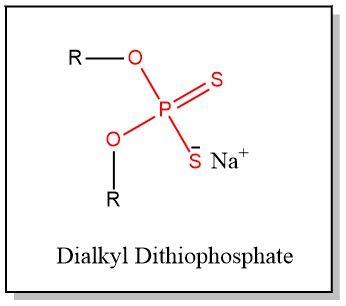
AEROFLOAT® and AERO® promoters
Dialkyl dithiophosphates find application in the flotation of Cu, Cu/Zn and Cu/Ni minerals for Cu and Ni sulfides, as well as activated Zn minerals. Given their relatively poor affinity for galena, dialkyl dithiophosphates are sometimes used in the copper circuit of Cu/Pb sequential flowsheets. The following lists our line of dialkyl dithiophosphate reagents and their respective uses.
Sodium AEROFLOAT® promoter – (R = ethyl). Used mainly for selective flotation of Cu from Cu/Zn ores where Zn minerals tend to float readily; for flotation of activated Zn sulfides where selectivity against iron sulfides presents a problem. Very selective against iron sulfides.
AEROFLOAT® 208 promoter – (R = ethyl + sec. Butyl). Selective collector for copper ores. Excellent collector for native Au, Ag and Cu.
AEROFLOAT® 211 promoter – (R = isopropyl). Selective collector for Cu and activated Zn minerals. Stronger collector than Sodium AEROFLOAT promoter.
AEROFLOAT® 238 promoter – (R = sec. Butyl). Widely used in Cu flotation and for increasing by-product Au recovery. Combines good collecting power with good selectivity against iron sulfides.
AERO® 3477 promoter – (R = isobutyl). A strong, but selective, collector for Cu, Ni and activated Zn minerals. Improves recoveries of precious metals, particularly those of the platinum group metals.
AERO® 3501 promoter – (R = isoamyl). Used for flotation of Cu and activated Zn minerals, especially for coarse middlings. Applications are similar to those of AERO® 3477 promoter, but tends to generate more froth.
AERO® 5430 promoter – (R = isobutyl). A "low-frothing" version of AERO® 3477 promoter. Used when maximum froth control is desired.
AERO® 5474 promoter – (R = isoamyl). A "low-frothing" version of AERO® 3501 promoter. Also used when maximum froth control is desired.
Key Attributes:
- The alkyl AERO® and AEROFLOAT® dithiophosphate promoters are more selective against iron sulfides in alkaline circuit than the corresponding xan- thates.
- Sodium AEROFLOAT® and AEROFLOAT® 208, AEROFLOAT® 211 and AEROFLOAT® 238 promoters have minimal effect upon froth generation.
- Sodium AEROFLOAT® and AEROFLOAT® 208, AEROFLOAT® 211 and AEROFLOAT® 238 promoters are poor collectors for galena, making them the ideal choice for selective flotation of Cu from Pb.
- For many ores, the alkyl AERO® and AEROFLOAT® are used as the principal collector, in conjunction with a xanthate as a secondary or scavenger collector. The longer chain ones are, however, often used as the sole collector to ensure maximum selectivity.
Dialkyl Monothiophosphates
AERO® 6697 - is a novel collector based on monothiophosphate chemistry, similar to AERO® 5688 promoter in many of its collector properties. AERO® 6697 promoter is in commercial use at a number of operating locations around the world. The choice between AERO® 5688 and AERO® 6697 promoters depends on the mineralogy/ore type, gangue mineralization, and frothing characteristics. On any particular ore, both products should be tested. For a description of typical applications, refer to the key attributes of AERO® 5688 promoters.
Flated Alkormuyl Phosphorous-Based Product
AERO® 7249 - is a formulated product that is used extensively in many Cu-Au plants, where it provides optimum recovery of both Cu and Au by combining the advantages of dithiophosphates and monothiophosphates, and provides excellent selectivity against iron sulfides.
Dialkyl Dithiophosphinates
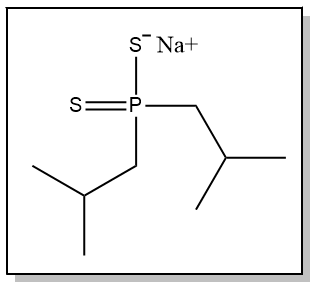
AEROPHINE® 3418A - is a unique, phosphine-based collector which was originally developed for the flotation of copper and activated zinc minerals. It is also an excellent collector for galena and precious metals. Its main attribute is the strong collecting power, but with excellent selectivity against iron sulfide minerals. On many ores, the dosage required may be considerably lower than that needed for a xanthate collector. For more detailed information please refer to our dedicated AEROPHINE® 3418 section.
Key Attributes:
- Low frothing characteristics, even on ores containing clay minerals
- Fast kinetics
- Good collection of coarse middling particles
- Powerful collector for galena and chalcopyrite
- Excellent selectivity against iron sulfides
- Effective in slightly acidic conditions
AEROPHINE® Blends
AERO® 6931 and the AEROPHINE® 3406, 3409, 3410 and 3416 formulations were developed recently as lower-cost versions of AEROPHINE® 3418A promoter. Comparative testing should always be conducted, to ensure that metallurgical results are equivalent to those obtained with AEROPHINE® 3418A promoter.
Mercaptobenzothiazole / Dithiophosphate-Based Collectors
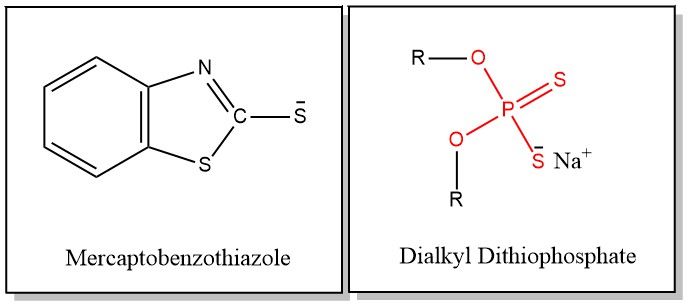
AERO® 400 series promoters
AERO® 400 series collectors are great base- and precious metal collectors in both acid, neutral and alkaline circuits. In acid circuits they are sometimes able to substitute xanthate completely, while under alkaline conditions they are stronger than dithiophosphates alone but retain selectivity against iron sulfides. They are also excellent for tarnished/slightly oxidized ores. The following lists our line of AERO® 400 collectors.
AERO® 400 - Used mainly for flotation of gold-bearing pyrite in acid and neutral circuits.
AERO® 404 - Widely used for the flotation of tarnished and secondary Cu minerals, tarnished Pb and Zn minerals, and precious metals in alkaline circuits. Excellent collector for pyrite and auriferous pyrite in acid and neutral circuits.
AERO® 407 - A stronger collector than AERO® 404 promoter. May substantially replace xanthates in many applications, while being more selective against iron sulfides in alkaline circuits. Useful for treating a wide range of precious and base-metal ores, particularly those of Cu, Ni and Zn. Excellent for bulk flotation of polymetallic ores and pyritic gold ores in acid circuits.
AERO® 412 - A stronger collector than AERO® 407 promoter with substantially the same applications.
Key Attributes:
- Generally stronger collectors than the corresponding alkyl AERO® and AEROFLOAT® promoters, but still more selective than xanthates against iron sulfides in alkaline circuits. Use of xanthate as a secondary collector is sometimes helpful in providing maximum recovery.
- Compared to alkyl dithiophosphates, longer conditioning times or addition to grinding mill is sometimes beneficial.
- Although originally developed mainly for the flotation of tarnished Pb ores, the AERO® 400 series promoters are now widely used in the flotation of most base-metal and precious metal ores. For the flotation of "oxide" Cu, Pb and Zn minerals, sulfidization is usually required.
Nitrogen-based collectors
Dialkyl Thionocarbamates
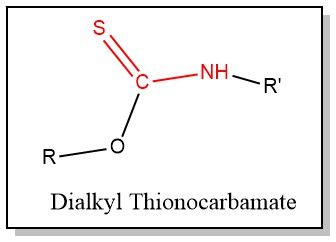
AERO® 3894 promoter
AERO® 3894 - is an oily collector that was originally developed for, and is still used in, the selective flotation of copper ores in alkaline circuits. However, due to its high selectivity, it generally requires the conjoint use of a xanthate to insure maximum recovery of middling (composite) particles. Being water-insoluble, addition to the grinding circuit is often beneficial.
Functionalized Thionocarbamates: Alkyl Alkoxycarbonyl Thionocarbamates
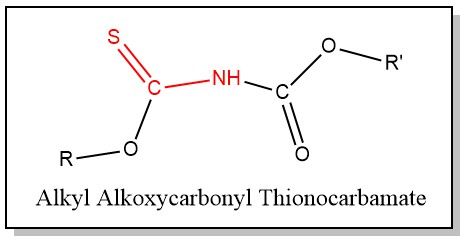
AERO® XD-5002
In view of the limitations of the dialkyl thionocarbamates mentioned above, Syensqo, in the mid-1980's, developed a series of functionalized thionocarbamates with the intention of producing collectors that combine the selectivity of the dialkyl thionocarbamates and the collecting power of xanthates. The other objective was to develop collectors, which would allow selective flotation of copper ores containing iron sulfides under mildly alkaline conditions (pH 8-10), in contrast to the higher pH values required to depress pyrite when using xanthate and other collectors. Essentially, this was achieved by the incorporation in the collector molecule of an O-containing (ethoxycarbonyl) functional group, thereby augmenting the role of the S functional group (see Flotation Reagent Fundamentals section). The introduction of this second functional group lowers the pKa of the molecule by several orders of magnitude, compared to that of dialkyl thionocarbamates. This allows the collector to be effective at lower pH values. Further, the second functional group provides for the formation of more favorable and stronger metal complexes (by chelation) and, therefore, stronger adsorption. This has been demonstrated by sequential adsorption studies. For example, structures like that of AERO® XD-5002 promoter have been shown to replace previously adsorbed dialkyl thionocarbamate from the mineral surface but, on the other hand, dialkyl thionocarbamate does not replace previously adsorbed AERO® XD-5002 promoter. The functionalized thionocarbamates are especially effective for copper-rich minerals such as chalcocite, digenite, covellite and bornite. They are poor galena collectors, as are all thionocarbamates.
AERO® XD-5002 - Structurally, this collector is N-butoxycarbonyl-nbutyl thionocarbamate and is especially suitable for the recovery of coarse middlings particles, while being only slightly less selective than AERO® 3894. It is widely used commercially (both as-is or a component of customized formulations) for the flotation of Cu, Cu-Mo and Cu-Au ores. In most cases, the dosage required of this collector is lower than that for the traditional collectors, in addition to providing considerable savings in lime costs due to its selectivity against pyrite.
Key Attributes:
- It is an excellent collector for secondary copper minerals (e.g. chalcocite, covellite, bornite).
- Being insoluble in water, addition to the grinding circuit or a conditioning step ahead of flotation may be beneficial. However, in many cases, AERO® XD-5002 promoter is more readily dispersible than the dialkyl thionocarbamates and allyl alkyl thionocarbamates (depending upon pH and other conditions). Consequently, in many cases, addition to the head of flotation is possible and, indeed, may be preferable. The best point of addition should be determined by laboratory and plant testing.
- Because of their high collecting power in moderately alkaline circuits and their high selectivity against iron sulfide minerals, the preferred rougher flotation pH for these collectors is usually in the range of 8 to 10, compared to the typical range of 10 to 12 required with other collectors. Similarly, in the cleaner circuits, the pH required is lower than that necessary with other collectors.
- Operating in the lower pH range not only provides a considerable reduction in lime costs, but on ores containing significant amounts of clay and other slimes, also reduces pulp viscosity. This usually enhances flotation efficiency or permits operating the circuit at higher % solids.
- AERO® XD-5002 promoter enhances the molybdenum recovery in both Cu-Mo ores and primary molybdenum ores.
- It has been well established in practice that the use of AERO® XD-5002 generally enhances the recovery of precious metals.
- Hydrolytic stability over a wide pH range (7 to 11).
Functionalized Thionocarbamates: Allyl Alkyl Thionocarbamates
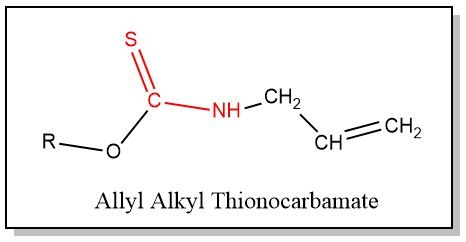
AERO® 5100 - is a modified version of IPETC, with incorporation of a functional group which increases its collecting power but retains its known selectivity against iron sulfide minerals. Due to its very low solubili- ty in water, it sometimes has a flattening effect on the froth, especially if over- dosed. The optimum point or mode of addition – to the grind, to a conditioner, or in stages – should always be determined by experiment. If a flat, dry froth is still a problem, the conjoint use of a small amount of a short-chain dithiophosphate such as Sodium AEROFLOAT® or AEROFLOAT® 208 promoter, is often helpful (in the order of 10 to 20% of the AERO® 5100 promoter dosage).
The principal uses of AERO® 5100 promoter are in the flotation of copper, activated zinc, and precious metals. It is an extremely poor collector for galena and is, therefore, an excellent choice for floating ores which contain only nuisance amounts of lead, or for selective flotation of copper in Cu-Pb-Zn ores.
Dithiocarbamates
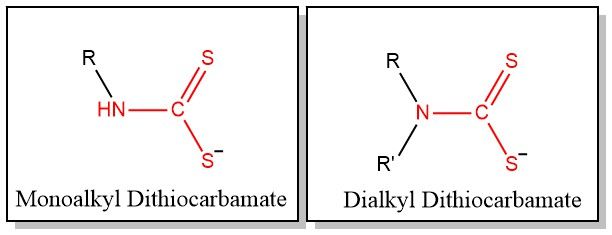
AERO® XD-700 Series
The use of dithiocarbamates in sulfide flotation is as old as that of xanthates. Their collector properties are similar to that of xanthates in many respects. They are excellent for Pb, Zn, and Ni minerals. Also, they are particularly suited for precious metals ores (Au, Ag and PGM).
They are much more stable than xanthates, even in acid circuits. Consequently, they are particularly effective for the flotation of most sulfides and precious metals in acid and neutral pH circuits.
AERO XD-700 - This is a solid product which is readily soluble in water like xanthates. Aqueous solutions are much more stable than those of xanthate.
AERO XD-702 - This is a liquid product. It is easy to handle, stable and can be fed as-is or as a solution in water (can make solutions of any strength).
Neutral (Oily) Dithiocarbamates
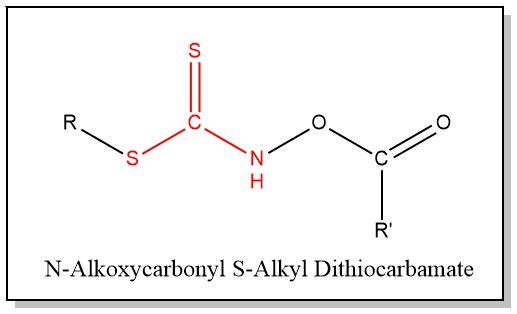
MAXGOLD® and AERO® MX-900 Series
In contrast to the water soluble dithiocarbamates, the neutral dithiocarbamates do not resemble the chemical properties of xanthates at all. Their chemical and metallurgical profile resembles more that of functionalized thionocarbamates. However, their ability to float gold, silver, and PGM bearing ores is unique. In addition, they have been very effective in the flotation of Cu/Au and Cu/Mo ores. Syensqo collectors exhibiting this chemistry are designated as MAXGOLD® collectors. Some of Syensqo's products in this family of collectors include AERO® MX-910, AERO® MX-915, and AERO® MX-945 promoters.
Key Attributes:
- Effective at very low to ultra low dosages, often resulting in disappearance of issues caused by the use of high incumbent collector dosages.
- Froth positive, potentially lowering frother requirements
- As its name implies, it is highly effective at improving Au, Ag and platinum group metals.
Special formulations
Collectors such as AERO® 4037, AERO® 7249, AERO® 8989, AERO® 9810 and other promoters, have all been custom-formulated to meet the requirements of individual copper, gold and zinc ores, and are based on the Syensqo collector chemistries discussed in previous sections. The applications of some of these products are described in the pertinent sulfide ore- and featured product sections. For more information on these products, or to plan a test program to optimize a product for your particular application, please contact your Syensqo representative