
Executive Summary
As a key component in the making of steel and batteries, Ni is nowadays in ever increasing demand. Ni is obtained from both laterite and sulfide deposits, and although 60% is contained in laterites, production comes mainly from sulfide deposits. Sulfide deposits can in turn be classified as either Ni and Cu-Ni ores depending on the content of Cu contained in the ore. Processing of said ores is, however, often dictated by the dominating gangue mineralogy and can be accordingly split roughly into those that are pyrrhotite-dominated or MgO-dominated although there can at times be overlap between these two types. There are many challenges encountered in the flotation of Ni and Cu-Ni sulfide ores including attaining selectivity against pyrrhotite and/or magnesium silicates, managing losses of Ni and Cu in fines as well as in difficult-to-float minerals, achieving a good separation of Cu-Ni in downstream process and managing the reporting of penalty elements such as arsenic to the value concentrates. The following provides some detail into the processing of Ni-and Cu-Ni ores in practice today.
General Comments / Major Considerations
Nickel Metal Production and End Use
Nickel can be obtained from two main sources: laterite deposits and sulfide deposits. Although laterite deposits account for more than 60% of the nickel resources, only about 40% of the world production comes from these deposits. Laterites are further divided into saprolite and limonite deposits, which determines how they are processed, whereby the former is processed by smelting and the latter by acid leaching or the Caron process. An important factor in the primary production of nickel metal is the grade and form of the final product, such that the product is divided into two categories: Class I nickel (electrolytic nickel, powders and briquettes, and carbonyl nickel) and Class II nickel (nickel pig iron and ferronickel). Class II nickel product has lower nickel content, however, it is still used for stainless steel because steel producers take advantage of its iron content. Class I nickel accounts for 55% of the total nickel mining output, whereas Class II accounts for the balance32. The main uses of nickel are in the stainless steel industry (or the so-called “nickel first use”), in metal alloys and also plating, however, uses in the battery industry (“nickel end use”) are on the rise14. About 70% of Class I nickel comes from refining of sulfide ore concentrates and only 30% from processing of laterite ores. Therefore, currently, sulfide deposits remain the main source of nickel metal and will likely continue to be in the near future.
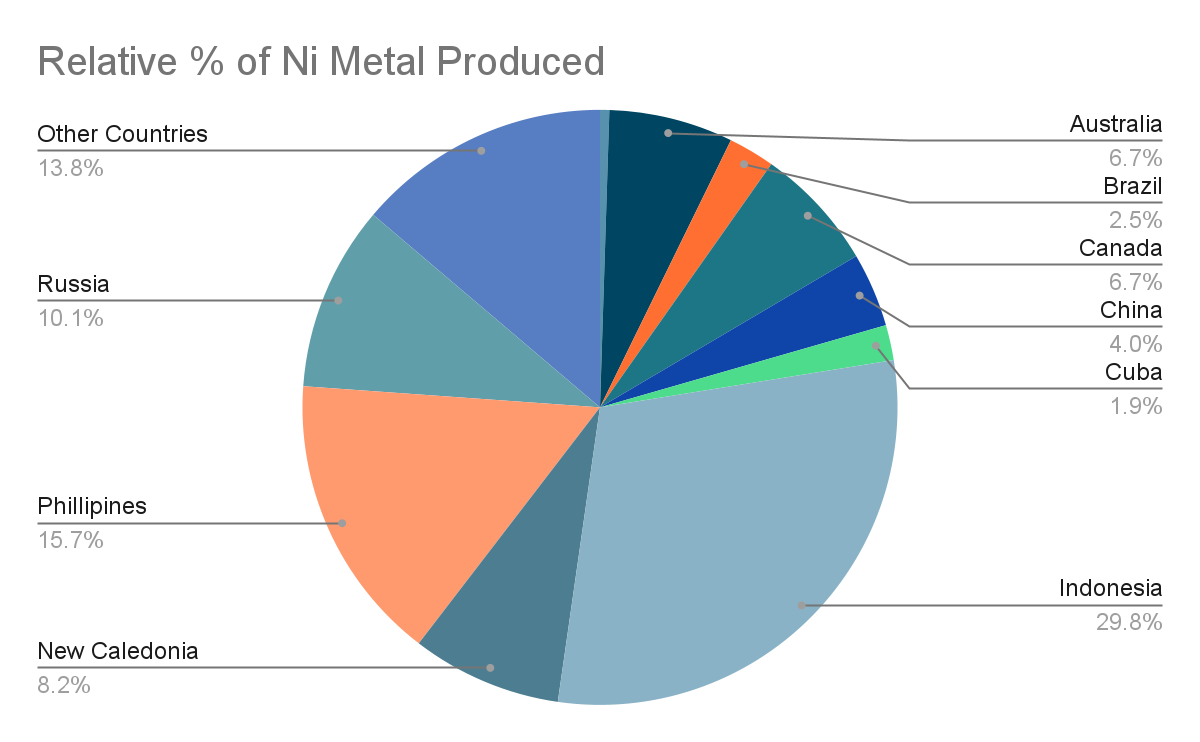
The main producers of nickel in the world include Indonesia, Philippines, Russia, New Caledonia, Canada, Australia, and China (see Figure 1). Notably, in the past ten years, China has emerged as a leader in nickel production.
The main nickel producing mining companies include MMC Norilsk Nickel, Jinchuan Group, Ambatovy, Anglo American, BHP Billiton, Glencore, JFE Mineral Company Ltd., Lundin Mining Corporation, Pacific Metals Co. Ltd., Sherritt International Corporation, Eramet, South32, Sumitomo Metals Mining Co. Ltd., Vale, and Western Areas Ltd. 1. Other players include Boliden, First Quantum and Mirabela to name a few.
In 2014, China accounted for half of the global use of nickel. Asia holds 70% of the nickel market share, with Europe at 20% and the US at 8%.
Classification of Ni Sulfide and Cu-Ni Sulfide Ores
One classification of nickel sulfide deposits is that according to the ultramafic and mafic orebodies with which they are associated13:
Class I – Intrusion-related: deposits associated with layered mafic or lenses of ultramafic rocks in igneous intrusive complexes.
Class II – Volcanic related: deposits associated with ultramafic volcanic flows.
The host rock for deposits of layered mafic igneous bodies is generally gabbro (composed of feldspar and pyroxene) whereas deposits of the intrusive ultramafic lens- or volcanic type are hosted by dunite or peroditite rocks (composed of olivine and pyroxene) or more often by their respective hydrated alteration derivatives serpentine and chlorite.
Another classification which emphasizes the processing focus of the ores was offered by Virginia Lawson as follows17:
- Type I ores: those that contain low to moderate pyrrhotite:pentlandite ratios where magnesium silicate (MgO) removal is the main focus (e.g. Raglan, Thompson, Norilsk).
- Type II ores: those that contain moderate to high pyrrhotite:pentlandite ratios leading to the need for pyrrhotite rejection (Sudbury ores, Voisey’s Bay, Norilsk).
- Type III ores: high pyrrhotite, low pentlandite ores (generally uneconomical with current technology).
- Type IV ores: low grade, high MgO ores that may be economical (Dumont, Santa Rita, Mt Keith, Kevitsa, etc.).
This classification is based on the fact that: a) pyrrhotite:pentlandite ratio has an impact on the grade of the final concentrate (with higher values leading to more difficult separation), b) MgO content in concentrate is problematic in the smelting process (with low grade ores usually containing more MgO-rich gangue), and c) the amount of copper in either of the ore types is variable and in some cases practically non-existent. In some operations, such as those of Norilsk in Northwest Siberia and those in the Bushveld Complex of South Africa, nickel is recovered as a secondary product of mining of platinum group metal ores13.
As mentioned, ores may have varying content of Cu and on that basis may be considered primary Ni (no Cu) or Cu-Ni ores and the Cu/Ni ratio will indeed have an impact as to what approach is taken in flotation. However, herein, we will adopt a classification based on what particular focus a mill has with respect to handling sulfide- and/or non-sulfide gangue and will constitute the frame of our discussion.
Ni and Cu-Ni Sulfide Mineralogy
The main nickel mineral in Ni and Cu-Ni sulfide ores is pentlandite (NiFe)9S8 accounting for 90% of nickel obtained from sulfide flotation. Other minor nickel minerals include millerite (NiS), violarite (Ni2FeS4), heazlewoodite (Ni3S2) and arsenides such as niccolite (NiAs) and gersdorffite (NiAsS). Pentlandite nearly always occurs in association with pyrrhotite (Fen-1Sn). Nickel may be in solid solution in pyrrhotite up to 1.5% which can account for a significant amount of the nickel.
In Cu-Ni ores, copper is mainly present as chalcopyrite (CuFeS2), with secondary minerals occurring as chalcocite (Cu2S), bornite (Cu5FeS4), covellite (CuS) and cubanite (CuFe2S3) to name a few. In some operations Cu is deported in valleriite, a Cu-containing mineral that consists of layers of Cu sulfide, brucite and gibbsite22 that is not amenable to flotation under alkaline conditions.
Challenges Faced
The processing of Ni and Cu-Ni ores is faced with many challenges of which the following is a representative list:
- Achieving selectivity against pyrrhotite, especially in ores with high pyrrhotite:pentlandite ratio in the feed or those with inadvertent activation of pyrrhotite.
- Achieving selectivity against silicates (as MgO) in the form of talc, chrysotile, lizardite and/or chlorite, leading to losses in recovery as well as grade of values in the concentrates. The impact of each of these minerals occurs due to different mechanisms.
- Achieving a given Fe:MgO target in the concentrate (related to the previous two points); dependent on smelter requirements.
- Improving Ni and/or Cu flotation kinetics.
- Improving Ni recovery.
- Managing arsenic minerals in the concentrate.
- Managing losses of Ni to fine size fractions (in the order of 10 𝛍m).
- Managing losses of Cu to minerals non-floatable under alkaline conditions (e.g. valleriite).
Next are some of the processing approaches mills have taken to address some of these challenges.
Traditional Strategies / Syensqo Recommendations
Based on the classification given by Lawson, flowsheet design and reagent selection will depend on the need for any or all of the following:
- Pyrrhotite rejection
- Rock rejection (usually as MgO)
- Copper-nickel separation
Of course, there is significant overlap among the above-mentioned categories. Note that significant amounts of both pyrrhotite and MgO in the ores can- and often do occur simultaneously, therefore, both pyrrhotite (or otherwise iron sulfide) and silicate gangue minerals need to be addressed. The following describes the practices in both primary nickel and copper-nickel sulfide flotation based on the characteristics of the ore.
Pyrrhotite-dominated ores
Pyrrotite (Po) to pentlandite (Pn) ratio often determines the need for Po rejection: ratios of 2.5 or less will normally not require Po rejection but this will depend on the target concentrate grades17. Higher Po:Pn ratios make it more challenging to selectively float Pn and depression of Po is normally needed. Note that there will always be loss of nickel when rejecting Po, due to mineralogical factors (e.g. associations, veins, etc.). Pyrrhotite depression is normally achieved with lime (or in some cases soda ash) when floating under mildly alkaline conditions (pH 7.5-9.5) and/or through careful control of collector dosage (typically xanthates) and addition points. Other approaches include: use of high Po as O2 sink in regrinding stages at pH > 10 to promote Pn flotation, use of polyamine depressants such as DETA (diethylene triamine) or TETA (triethylene tetraamine) together with sodium sulfite, metabisulfite or SO2 and, lastly, use of polymeric depressants. Sodium cyanide is used under high lime conditions at stages where copper is selectively floated from pentlandite and pyrrhotite. In primary nickel ores, depression of Po depends on the copper content of the ore: in low copper-containing ores, Po can be depressed with soda ash alone; in ores with high copper content, cyanide or a combination of polyethylene amines (e.g. DETA or TETA) and sulfite are effective Po depressants23.
The use of sulfites and SO2 with DETA (or TETA) has shown a synergistic effect for pyrrhotite depression, where the level of depression achieved with either DETA (or TETA) or SO2 alone was less than the combination of both components10a, 10b, 10c. Furthermore, DETA seems to be more effective under reducing conditions and oxidation of pyrrhotite also seems to enhance its action10a. However, the opposite has also been said: that DETA works most effectively under oxidizing conditions where it is believed that the transformation of activation products, say NiS and CuS, are oxidized to their respective oxides/hydroxides which in turn would readily react with DETA to form soluble complexes10c. Nevertheless, most evidence favors the notion that reducing conditions are best for effective separation between pentlandite and pyrrthotite when using the DETA(TETA)/SO2 (or sodium metabisulfite or sodium sulfite) scheme. DETA has also been shown to hinder xanthate adsorption onto pyrrhotite further widening the “selectivity” window between pentlandite and pyrrhotite2. It is also thought that DETA (or TETA) forms soluble complexes with activating metal ions in solution, such as Ni2+ and in this manner precludes their adsorption onto pyrrhotite. The mechanisms of action of SO2 have been postulated to be any of the following10a: i) “destroying” the hydrophobic collector coatings, like dixanthogen (X2) and ferric hydroxy xanthates (Fe(OH)2X) on pyrrhotite, ii) removing hydrophobic surface oxidation products such as elemental sulfur (S0) and/or polysulfides (S2-n+1) by forming thiosulfate ions, iii) SO2 oxidizing to form dithionate (S2O62-) followed by formation of insoluble precipitates with Ni-DETA complexes, iv) SO2 serving as a potential modifying agent that maintains low potentials where Fe(DETA)2+ and Fe(OH)DETA+ complexes are stable whereas Fe(OH)2X are not thermodynamically favored. Point iv) assumes that Fe-DETA complexes reside at the surface, however, this may not be true as these compounds are soluble. Despite the performance of these reagents, recently due to environmental concerns, use of polyamines have ceased in some operations (e.g. Vale’s Clarabelle mill, see Dong and Xu, 2012).
Syensqo recommends AERO®7261A, an excellent Po depressant that has little impact on Pn flotation. In order to give better control on its dosing, AERO®7261A has been effectively used together with sodium hexametaphosphate (“NaHMP”, as 20% w/w in water) typically at a ratio of 1:3 polymer:NaHMP. Syensqo's AERO®NP series of collectors, specifically designed for Ni and Cu-Ni ores, offer a range of selectivity against Po while maintaining Pn recoveries. These can be used alone or in conjunction with xanthates and AERO®7261A for better control in managing Po rejection. Performance of these collectors is covered in a separate section.
The crystallographic phase with which pyrrhotite occurs has an impact on its flotation properties. For example, monoclinic pyrrhotite is ferromagnetic and can be separated with magnetic drums ahead of flotation (although this practice is virtually obsolete). On the other hand, hexagonal pyrrhotite is paramagnetic and has been shown to be more flotable than monoclinic pyrrhotite, therefore, operations with ever-increasing presence of hexagonal pyrrhotite face a challenge in managing its rejection. In lieu of depressants such as DETA, operations manage pyrrhotite rejection by regrinding at high pH to both further liberate locked pentlandite and hinder the flotation of pyrrhotite by virtue of its finer size after regrinding. Other processing strategies can indirectly achieve rejection of Po by taking advantage of the inherent surface chemical processes occurring in the pulp. For example, use of recirculating loads in dedicated pyrrhotite rejection circuits has the purpose of using pyrrhotite as an oxygen sink in order to minimize the oxidation of pentlandite by maintaining low pulp potentials, i.e. predominantly reducing conditions. In turn, reducing conditions would presumably work against adsorption of xanthate onto pyrrhotite or the formation of dixanthogen on its surface as compared to pentlandite for which adsorption is favored at potentials lower than pyrrhotite. This latter fact is used in practice in so-called “pyrrhotite rejection circuits”, where in the first few cells after the regrinding mill, the low (i.e. highly reducing) potential of the pulp (< -250 mV vs. Standard Calomel Electrode) allows for the selective flotation of pentlandite and precious metals against pyrrhotite; streams rising above the predetermined potential start showing loss of selectivity against pyrrhotite and are sent back to the regrinding mill11.
Oxidation and/or aging of pyrrhotite also has a great impact on its floatability. It has been said that pyrrhotite can acquire more flotation “potential” by formation of polysulfides and/or through activation by heavy metal ions (e.g. Cu2+, Ni2+, or Ag+), where the source of the latter may be recycled mill water10c or can occur during weathering of ore stockpiles12.
Another main difficulty in pyrrhotite depression is related to managing the associated loss of pentlandite, given that the latter is very commonly associated with pyrrhotite as mentioned previously (either in solid solution or as fine, flame-like intergrowths) where the nickel content in hexagonal pyrrhotite is usually higher than in the monoclinic variety13.
Finally, in the scavenging stages, pyrrhotite and sulfides in general are normally recovered by using high dosages of longer chain xanthates, lowering the pulp pH (with sulfuric acid) and/or using copper sulfate as an activating agent.
Magnesium silicate-dominated ores
The main silicate gangue minerals in ultramafic nickel ores are talc, serpentine (chrysotile, lizardite) and orthopyroxene. Notable examples of concentrators that process such ores include: Thompson mill (Birchtree ore, Canada), Raglan (Canada), Jinchuan (China), Hitura (Finland), Leinster (Australia), Mount Keith (Australia) and Santa Rita (Brazil). Rejection of these silicates is achieved through the use of carboxymethyl cellulose, dextrin, guar, saline water, or polymeric depressants and can be complemented by processing strategies such as the addition of pre-floating or desliming steps to the flowsheet 9-10. Soda ash (as opposed to lime) is typically, although not exclusively, the reagent used for pH modification in these types of ores as it also can serve as dispersant and as water softener. Again, xanthates are the predominant collector used.
Currently, processing of ultramafic ores yields poor value mineral metallurgy19a, 19b, 19c, 19d. Many are the effects of silicates on value recoveries and grades which strongly depend on their nature, i.e. hydrophilicity, morphology, charge, etc.
Fine silicates (e.g. serpentines) can coat value minerals, interfere with collector adsorption, and hinder bubble-mineral attachment, thereby impacting recovery and grade of value mineral species. This phenomenon is often referred to as “slimes coating”, i.e. coating of oppositely charged value minerals by very fine silicates through heterocoagulation, with a concomitant negative impact on floatability26. The emphasis in the published literature on “slimes coating”, however, has been disproportionate to other important effects. For example, it has clearly been demonstrated that the presence of fiber-forming serpentines (chrysotile, lizardite) changes the rheological properties of the pulp by rendering it more viscous and results in the transport of silicate fiber networks to the concentrates by entrapment25a, 25b. In addition, transport of non-hydrophobic silicate fines can occur by entrainment19a.
Naturally hydrophobic silicates, predominantly talc, impact recovery of value minerals by crowding them out of the froth and tend to impact grade as well. This effect is more pronounced in ores of very low sulfide value grade, where it is even more challenging if the values are finely disseminated. In addition, the consumption of reagents (collectors, depressants and frothers) is increased in the presence of large quantities of talc (e.g. the Mimosa mine PGM operation in Africa).
The nature of the challenges posed by silicates can be addressed by the use of reagents in the Syensqo portfolio. The effects of slimes coating value minerals can be mitigated by using Syensqo dispersants such as Cyquest®40E, Cyquest®3223, Cyquest®4000 (for high Ca2+ conditions in which lime is used), or using commodities such as polyphosphates, sodium silicate, carboxymethyl cellulose etc. which provide stability to colloids of fine silicates and prevent them from coating the value minerals. Another alternative is the use of high salt concentrations (e.g. by using seawater or brine) to compress double layers at both value and silicate mineral surfaces (thus negating heterocoagulation); however, the use of seawater or brine has been shown to negatively impact flotation of value minerals presumably due to formation of precipitates of metal cation hydrolysis products (mainly magnesium hydroxides) 15. Detrimental effects from formation of silicate fiber networks, by contrast, pose a greater challenge, with one effective strategy being that of operating at low pH ( < 5) so as to effect dissolution of the fibers25b, 33. Operation at lower pH, nevertheless, brings with itself issues regarding corrosion and instability/degradation of flotation reagents (in particular, xanthates). Another approach is that of operating at lower percent solids so as to lower the pulp viscosity and thus negating its effect on bubble dispersion and transport. Finally, naturally floating silicates (such as talc), can be handled by the use of depressants such as of AERO®8860GL, AERO®633 or more commonly with commodities such as carboxymethyl cellulose, guar, or other similar starches. One processing strategy proposed is that of adding a pre-floating stage to remove most of the talc ahead of the actual flotation circuit9 (to the best of the author’s knowledge no nickel or copper-nickel operation has a talc pre-floating stage).
Copper-nickel separation
Three processing strategies for copper-nickel separation include: i) bulk Cu-Ni flotation followed by Cu-Ni separation; ii) sequential flotation of copper and nickel; and iii) separation of copper-nickel matte. The choice of which strategy to employ is dictated by the Cu/Ni ratio. Syensqo offers the AERO®NP series of collectors specifically designed for application at any of these stages including the bulk rougher.
After generation of a bulk concentrate (obtained in a preceding bulk rougher stage with xanthate at pH 8.0-9.5), copper-nickel separation is usually achieved by floating Cu minerals and depressing Ni minerals with lime at high pH (~12). Ease of separation of copper from nickel goes proportionally with Cu-Ni ratio. Also, since chalcopyrite tends to not be associated with pentlandite, this fact makes their separation somewhat easier. Nickel grade in copper concentrates (e.g. in Vale’s Clarabelle operation) is known to increase with increasing xanthate dosages in the roughing stages and “xanthate removal” strategies ahead of copper-nickel separation stages have been implemented such as aeration tanks, the use of steam or the use of thickening16. Cyanide has also been used to depress both pentlandite and pyrrhotite (as well as other unwanted minerals) in the cleaning and/or Cu-Ni separation stages; this is particularly necessary whenever xanthate dosages are high. Other depressants such as DETA/sodium sulfite, sodium sulfite alone and dextrin have been explored for this purpose but their performance has not been as good as that of cyanide16. Other factors that make the separation more challenging include the presence of easily floatable minerals such as millerite (NiS) which contaminate the Cu concentrate. Millerite is known to not be associated with pyrrhotite and therefore rejection of pyrrhotite does not result in loss of millerite. Furthermore, millerite is more floatable than pentlandite and the common strategy of high-lime aeration conditioning, a standard practice in separation of chalcopyrite from pentlandite, has proven to be much less effective34. In general, nickel grades in copper concentrates are usually kept < 0.5%.
In the second practice, copper-nickel sequential flotation, AEROPHINE®3418A, xanthate, IPETC, or dithiophosphates are added to the copper rougher at starvation dosages (in the order of < 10 g/t) under higher pH (10.5-11.0) conditions, achieved with lime, in order to suppress nickel and iron minerals. The nickel may then be reactivated downstream with copper sulfate or by lowering the pH (with sulfuric acid) with xanthate used as collector. Copper-nickel sequential flotation is often chosen when Cu/Ni ratio exceeds 2:14.
The third copper-nickel separation practice is the processing of copper-nickel matte. Copper-nickel matte usually consists of three phases: chalcocite (Cu2S), heazlewoodite (Ni3S2) and a metallic copper-nickel alloy (usually containing PGMs), in which the metallic phase is extracted first magnetically. The copper and nickel phases are then separated by flotation at high pH (with lime) and the use of xanthate, IPETC, AEROPHINE®3418A or diphenyl guanidine (DPG)27a, 27b. Methyl isobutyl carbinol (MIBC) can be used as frother (when not using diphenyl guanidine). Selectivity and recoveries are usually best with diphenyl guanidine, with effectiveness increasing with increasing pH; xanthates, on the other hand, tend to be very non-selective at lower pH levels and not as effective at higher pH (> 12)28. Diphenyl guanidine helps create a well-formed froth and therefore serves as both collector and frother16. One disadvantage of diphenyl guanidine, however, is that it is highly carcinogenic and water soluble and therefore problematic to handle in practice24. Mercaptobenzothiazole together with MIBC has been demonstrated to yield better results than DPG in the lab; however, the reagent scheme did not work in the plant, where the nickel assay in the copper concentrate remained high16. Finally, dextrin has been evaluated as a potential depressant for heazlewoodite24.
Electrochemical potential seemingly impacts copper-nickel matte separation. For example, it has been observed that recovery of heazlewoodite is sensitive to pulp potential where, for example, at potentials higher than 400 mV vs. SHE (at pH 11.2), recoveries are very low. On the other hand, little effect is observed for chalcocite recovery27a.
Smelting processing technology of PGM ores (usually containing copper and nickel, e.g. in South African operations) remains closely based on traditional copper-nickel matte smelting, and due to the high value of PGM products, the process is rarely changed.
The presence of arsenic complicates the refining of nickel matte and therefore levels of arsenic are maintained low in nickel concentrates30.
Managing Arsenic-Containing Nickel Minerals
Arsenic in copper-nickel ores can occur as gersdorffite (NiAsS), niccolite or nickeline (NiAs), maucherite (Ni11As8), rammelsbergite (NiAs2), annabergite (Ni3As2O8•8H2O), arsenopyrite (FeAsS), cobaltite (CoAsS), loellingite (FeAs2), sperrylite (PtAs2) and others (Senior et al, 2009). Arsenic minerals are normally present in trace levels in most ores. In nickel sulfide ores of Western Australia, gersdorffite and niccolite are the major arsenic-bearing minerals31. Rejection of arsenic minerals is important due to the obvious environmental concerns and given that arsenic is a penalty element making it difficult to sell nickel concentrate to smelters. Arsenic complicates the refining of matte: it changes the morphology of the matte by decreasing the grain size of chalcocite which in turn impacts the separation of copper from nickel in matte flotation.
There is limited literature on flotation of arsenic-bearing minerals in the context of copper-nickel ores and the little available deals with depression of arsenides (mainly gersdorffite)6b. The depressant methods, however, have not been adopted in practice as of yet31.
In practice, management of arsenic content in the concentrate is handled either operationally or chemically. In some operations, ores containing higher arsenic are diluted by blending with lower arsenic ores such that the mill feed contains levels that will not be problematic later, e.g. at the smelter or matte separation plants. Alternatively, control of arsenic minerals can be achieved by flotation at pH levels > 10 together with the use of cyanide as a depressant.
Important Ratios in Nickel and Copper-Nickel Ore Processing
In nickel and copper-nickel sulfide beneficiation, there are a few important ratios that determine how ores are processed and/or if they need to be blended to achieve predetermined characteristics for mill feed. Likewise, they serve as guides in establishing the specifications of concentrates for subsequent sale to the smelter. The three main ratios are: 1) pyrrhotite:pentlandite, 2) Fe:MgO, and 3) copper:nickel.
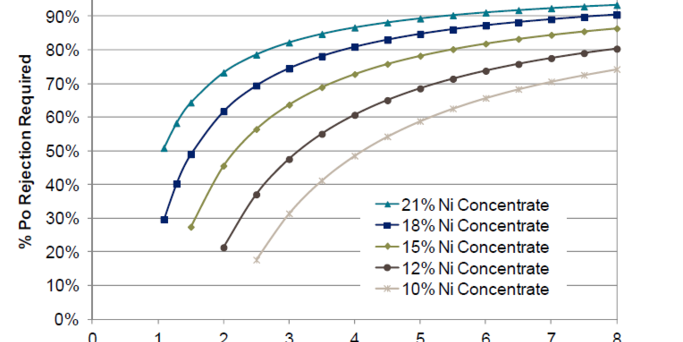
Pyrrhotite:pentlandite ratios, together with the required concentrate grade, will dictate the need and degree of pyrrhotite rejection required (Figure 2)17 and is usually an indicator of the difficulty in achieving selectivity between pentlandite and pyrrhotite. High pyrrhotite:pentlandite ratios (> 2.5) with a 20% Ni target grade, will normally require significant depression of the iron sulfide, however, the extent of pyrrhotite depression needs to be carefully managed given that a certain level of nickel is usually contained in the pyrrhotite and would thus be lost.
Fe:MgO ratio is typically a parameter that is important for smelting operations post-concentration, with a ratio of 5 being normally the target. The significance of this ratio is that operations with low sulfur content (normally as Po and Cu-Ni values) will typically float as much of the sulfides as possible with less concern for iron sulfides as would be the case of massive-sulfide, pyrrhotite-dominated ores (where by low sulfur it is meant levels of ≦ 2%, e.g. Mt Keith in Western Australia). These ores, however, will typically have large amounts of MgO and thus maintaining or achieving high Fe:MgO ratios may be quite challenging. Sulfur serves as fuel in the smelting process and is desired to a point, however, too much sulfur can lead to excessive generation of SO2 with both processing and environmental concerns. Magnesia content in concentrates, on the other hand, is normally kept below a certain level (typically 7%), above which slag viscosity in the smelters is impacted by requiring higher bath temperatures (with a shortening of furnace brick life and an increase in metal losses to the slag)13.
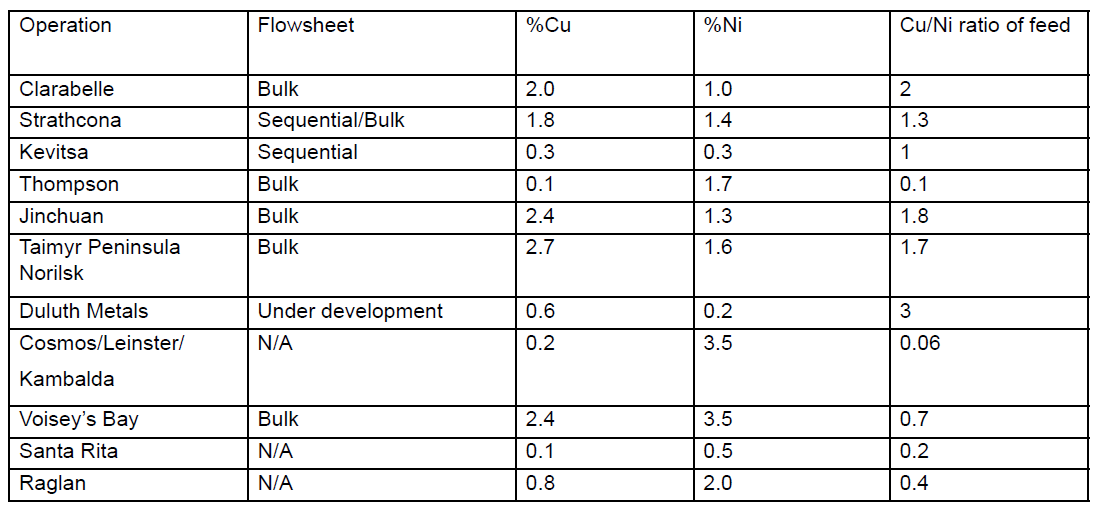
The ratio of copper:nickel in the ore determines whether or not it will be floated sequentially and is indicative of whether it is difficult to separate a bulk copper-nickel concentrate downstream. As mentioned previously, usually a copper:nickel greater than 2 warrants a sequential flotation of copper and nickel, although by no means is this a hard rule as illustrated in Table 1. In some operations, high Cu ores are prefloated or flash floated prior to the bulk roughing stage to allow for enough residence time for Ni flotation.
Table 1. Flowsheet (bulk vs. sequential) against Cu/Ni ratio for Cu-Ni sulfide operations around the world (Taken from Lawson, 2014).
 Loss of Nickel in Fines
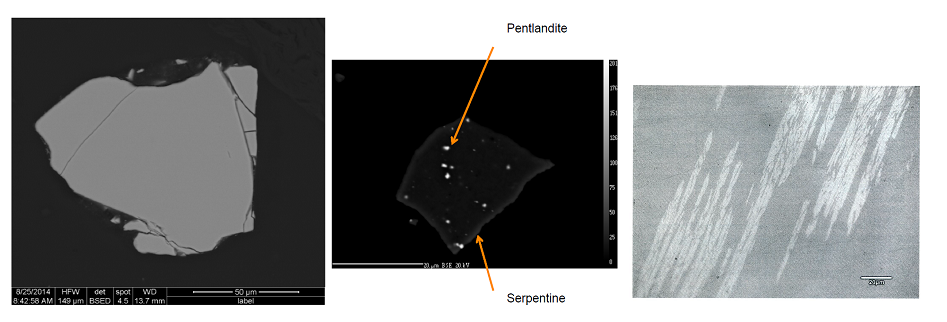
A common problem in both pyrrhotite-dominated and MgO-dominated ores is the loss of nickel fines, due to excessive grinding, as pentlandite has a tendency to fracture quite easily. Also, fine dissemination of the sulfides in the ore can result in pentlandite fines attaching to naturally hydrophilic gangue. In addition, pentlandite can occur as flame-like intergrowths within pyrrhotite known as “pentlandite flames” which are in the order of 10-20 microns in size and are practically not recoverable (without dilution of Ni grade); all of the above are all illustrated in Figure 3.
It is known that, compared to chalcopyrite, pentlandite has a narrower window of particle sizes for which flotation is optimal as shown in Figure 4. The cutoffs are > 75 microns on the coarse side and < 10 micron on the fine side29. Therefore, preparation of pentlandite in flotation feed is important for achieving the best metallurgical results.
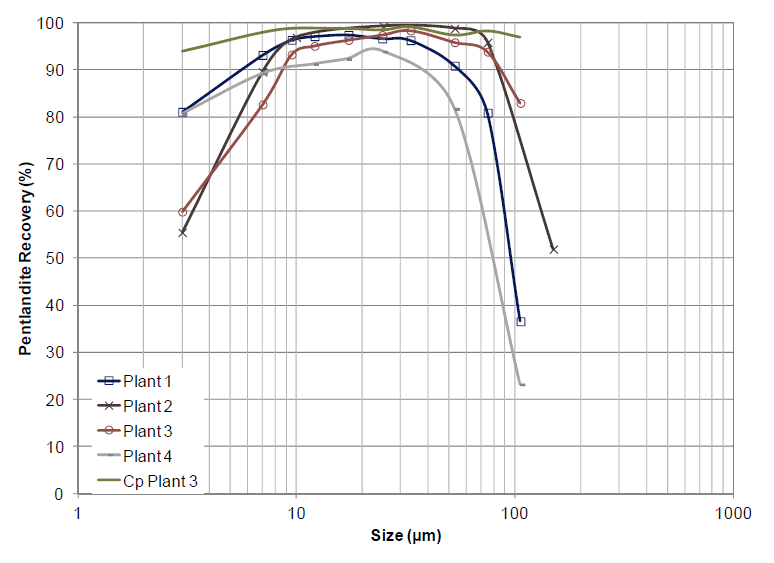
Regarding plant feed preparation, one processing strategy that has been lauded as a solution to better recovery of fines is that of high intensity conditioning3. What is meant by conditioning here is any pulp treatment, mainly agitation after grinding. Not much attention was paid to the intensity of pulp agitation between the 1950s and the late 1980s, but in 1989 it was shown that high intensity conditioning, i.e. high input of agitation energy into the pulp, led to increase in the recovery and selectivity of ultrafine slimes (< 10 microns)3, 5a. However, elsewhere it was observed that high intensity conditioning only had an impact on the rate of flotation and recovery of particles in the intermediate size class ( > 10 microns, < 75 microns)5b. Other effective strategies to deal with value fines have included bubble size reduction (as in column flotation)8 or increasing particle velocity (through better mixing, such as in a Jameson cell for example)1, but these come at the expense of selectivity. Yet another strategy is that of magnetic conditioning, whereby a high intensity magnetic field is applied to the pulp during flotation conditioning in order to effect aggregation of the paramagnetic sulfide fines; a procedure that is said to have been successful at least at one operation21.
Nickel can also be present in solid solution in Po at 0.4% to 1.4%, and therefore rejection of this nickel-containing Po will result in loss of Ni as well. Unfortunately, there are currently no means of avoiding the loss of nickel in these instances. Therefore, overall, given that nickel is contained in various inclusions (mainly in pyrrhotite) as mentioned above, one characteristic of nickel ores is that final nickel concentrates usually do not exceed 18% Ni4.
Loss of Cu in Valleriite
As mentioned in the mineralogy section previously, in some Cu-Ni operations, Cu is sometimes present in a layered mineral called valleriite (often in very large amounts). Valleriite is said to be the product of secondary hydrothermal conditions occurring within deposits that are always (aside from some exceptions) associated with more or less serpentinized ultramafic rocks22. Valleriite does not float under alkaline conditions but is however known to float at low pH in the range of 4-518, conditions under which xanthates readily decompose and thus have been shown to not perform well for this purpose. Syensqo has developed a collector specifically for this purpose, AERO® NP8 (AERO® 8210CN) which is excellent at floating valleriite at pH of 4.0-5.5 (see AERO® NP Series section for a case study at the plant level).
References
- Ahmed, N. and Jameson, G.J., The Effect of Bubble Size on the Rate of Flotation of Fine Particles. International Journal of Minerals Processing 1985, 14, 196-215.
- Basilio, C. I. M., M.A.; Kerr, A.N.; Stratton-Crawley, R. In Studies of the Pyrrhotite Depression Mechanism with Diethylenetriamine, XIX International Minerals Processing Congress, 1995.
- Bulatovic, S. M. and Salter, R.S. High Intensity Conditioning-A New Approach to Improving Flotation of Mineral Slimes, Symposium on Processing of Complex Ores, Halifax, Canada, Metallurgical Society of Canadian Institute of Mining and Metallurgy: Halifax, Canada, 1989; pp 169-181.
- Bulatovic, S. M., Chapter 16 - Flotation of Nickel and Nickel–Copper Ores. In Handbook of Flotation Reagents, Elsevier: Amsterdam, 2007; pp 401-442.
- (a) Chen, G.; Grano, S.; Sobieraj, S.; Ralston, J., The effect of high intensity conditioning on the flotation of a nickel ore, part 2: Mechanisms. Minerals Engineering 1999, 12 (11), 1359-1373. (b) Chen, G., Grano, S., Sobieraj, S., Ralston, J., The Effect of High Intensity Conditioning on the Flotation of a Nickel Ore. Part 1: Size-by-Size Analysis. Minerals Engineering 1999, 12 (10), 1185-1200.
- (a) Dai, Z.; Garritsen, J.; Wells, P.F.; Xu, M., Arsenic Rejection in the Flotation of Garson Ni-Cu Ore. Centenary of Flotation Symposium, Brisbane, QLD 2005; (b) Qun, W. and Heiskanen, K., Separation of Pentlandite and Nickel Arsenide Minerals by Aeration Conditioning Flotation. International Journal of Minerals Processing 1990, 29, 99-109.
- Dong, J.; Xu, M., Mitigation Strategies to Reduce Diethylenetriamine (DETA) Residual in Tailings Water at Vale's Sudbury Operation. Water in Mineral Processing, SME First International Symposium 2012, 339-351.
- Finch, J.A. and Dobby, G.S. , Column Flotation. Pergamon Press: Oxford, 1990.
- Franca, S. C. A.; Couto, H.J.B. In Beneficiation of Low-Grade Weathered Nickel Sulfide Ore for Metallurgical Uses, XXVII International Mineral Processing Congress, Santiago, Chile, Santiago, Chile, 2014.
- (a) Kelebek, S.; Fekete, S.O.; Wells, P.F. In Selective Depression of Pyrrhotite Using Sulphur Dioxide-Diethylenetriamine Reagent Combination, XIX International Minerals Processing Congress, 1995; (b) Chen, X., Control of Surface Chemistry of Gold, Pyrite and Pyrrhotite. 1997; (c) Mendiratta, N. K.; and Yoon, R.H. In Effects of Diethylenetriamine and Sulfur Dioxide on Pyrrhotite Depression, SME Annual Meeting, Denver, Colorado, Denver, Colorado, 2001; p 7.
- Kelebek, S., et al. "Process for improved separation of sulphide minerals or middlings associated with pyrrhotite." U.S. Patent No. 5,795,466. 18 Aug. 1998.
- Kelebek, S.; Nanthakumar, B.; Katsabanis, P.D. Effect of Air-Oxidation on Flotation of Pyrrhotite and Pentlandite: Stockpile Oxidation vs Artificial Oxidation, 45th Annual Conference of Metallurgists of CIM, Montreal, Quebec, Canada, Xu, Z. L. Q., Ed. Montreal, Quebec, Canada, 2006.
- Kerr, A., An Overview of Recent Developments in Flotation Technology and Plant Practice for Nickel Ores. 2002.
- Kuck, P. H. Mineral Commodity Summaries: Nickel; U.S. Geological Survey: 2016; pp 114-115.
- Laskowski, J.; Castro, S., Flotation in Concentrated Electrolyte Solutions. International Journal of Minerals Processing 2015, 144, 50-55.
- Lawson, V. R., L. In Copper Nickel Separation, XXVI International Mineral Processing Congress, New Delhi, India, September 24-28, 2012; New Delhi, India, 2012.
- Lawson, V., Hill, G., Kormos, L., Marrs, G. , The Separation of Pentlandite from Chalcopyrite, Pyrrhotite and Gangue in Nickel Projects Throughout the World. In AusIMM Mill Operators Conference, Townsville, 2014.
- Li, R., and L. Cui. "Investigations on Valleriite from Western China: crystal chemistry and separation properties." International Journal of Mineral Processing 1994, 41(3-4): 271-283.
- a) Mani, H., Quinn, X.P, The Effect of Ultramafic Mineralogy on Pentlandite Flotation. Processing of Complex Ores 1997, 1101:63-76; (b) Musuku, B.; Muzinda, I.; Lumsden, B., Cu-Ni Processing Improvements at First Quantum's Kevitsa Mine. Minerals Engineering 2016, 88, 9-17; (c) Miettunen, H.; Heiskanen, K.; Keiski, R.L., A Few Aspects of the Connections between Ore Mineralogy and Flotation Results at Hitura Nickel Mine in Finland. Minerals & Metallurgical Processing 2015, 32 (1), 38-44; (d) Papunen, H., Penttila, V., Mineralogy and Geology of the Serpentinite Associated Hitura Ni-Cu Deposit, Finland: Implications for Beneficiation. In Nickel 1996, Kalgoorlie, 1996.
- Manouchehri, H-R. et al. In Magnetic Conditioning of Flotation Feed to Increase Recovery of Fine Value Minerals at Boliden's Garpenberg Concentrator, XXVII International Mineral Processing Congress, Santiago, Chile, Santiago, Chile, 2014.
- Manouchehri, H-R. Magnetic conditioning of sulfide minerals to improve recovery of fines in flotation—a plant practice. Minerals & Metallurgical Processing 2018, 35(1): 46-54.
- Mücke, Arno. Review on Mackinawite and Valleriite: formulae, localities, associationsand intergrowths of the minerals, mode of formation and optical features in reflected light. Journal of Earth Science & Climatic Change 2017, 8(11):1-18.
- Nagaraj, D. R.; Farinato, R.S.; Arinaitwe, E., Flotation Chemicals and Flotation Chemistry. SME Handbook 2015.
- Nyamekye, G. A. Adsorption of Dextrin onto Sulphide Minerals and Its Effect on the Differential Flotation of the Inco Matte. University of British Columbia, 1993.
- (a) Patra, P.; Bhambhani., T.; Vasudevan, M.; Nagaraj, D.R.; Somasundaran, P., Transport of Fibrous Gangue Mineral Networks to Froth by Bubbles in Flotation Separation. International Journal of Minerals Processing 2011, 104-105, 45-48; (b) Patra, P., Bhambhani, T.; Nagaraj, D.R.; Somasundaran, P., Dissolution of Serpentine Fibers Under Acidic Flotation Conditions Reduces Inter-Fiber Friction and Alleviates Impact of Pulp Rheological Behavior on Ni Ore Beneficiation. Colloids and Surfaces A: Physicochemical and Engineering Aspects 2014, 459, 11-13.
- Pietrobon, M. C. G., S.R.; Sobieraj, S.; Ralston, J., Recovery Mechanisms for Pentlandite and MgO-Bearing Gangue Minerals in Nickel Ores From Western Australia. Minerals Engineering 1997, 10 (8), 775-786.
- (a) Rao, G., Nickel and cobalt ores: flotation. Regional Research Laboratory, Council of Scientific and Industrial Research, Bhubaneswar, India 2000, 3491-3500; (b) Agar, G. E.; Khan, F.; Markovich, B.; Mukherjee, A.; Shea, B.; Kelly, C., Laboratory Flotation Separation of Inco Bulk Matte. Minerals Engineering 1996, 9 (12), 1215-1226.
- Schluter, R. B., Separation of Copper-Nickel Mattes From Duluth Gabbro Concentrates by Flotation and Magnetic Methods. Mines, U. S. B. o., Ed. 1982.
- Senior, G. D.; Smith, L.K.; Trahar, W.J., The Flotation of Pentlandite from Pyrrhotite with Particular Reference to the Effects of Particle Size. International Journal of Minerals Processing 1994, 42, 169-190.
- Senior, G. D.; Smith, L.K.; Silvester, E.; Bruckard, W.J., The Flotation of Gersdorffite in Sulphide Nickel Systems-A Single Mineral Study. International Journal of Minerals Processing 2009, 93, 163-171.
- Senior, G. D.; Smith, L.K.; Bruckard, W.J., The Flotation of Niccolite-A Single Mineral Study. International Journal of Minerals Processing 2010, 94 (1-2), 92-96.
- The Nickel Institute: Life of Ni (2016).
- Uddin, S.; Rao, S.R.; Mirnezami, M.; Finch, J.A., Processing an Ultramafic Ore Using Fiber Disintegration by Acid Attack. International Journal of Minerals Processing 2012, 102-103, 38-44.
- Xu, M.; Ford, F.D.; Dai, Z.; Lawson, V. In Millerite and Its Impact on Cu/Ni Separation, 43rd Annual Canadian Mineral Processors Conference, Ottawa, Ontario, Canada, Ottawa, Ontario, Canada, 2011.